
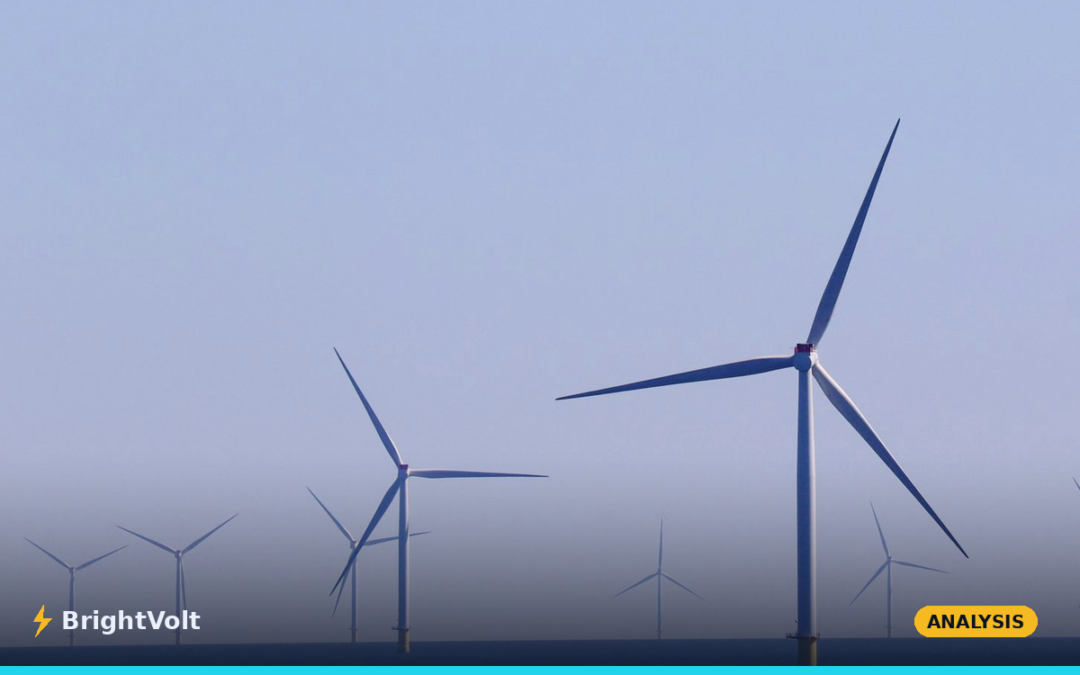
Victoria has opened Australia’s first offshore wind auction, seeking bids for 2 gigawatts of capacity off the Gippsland coast — enough, the government says, to power around 1.5 million homes. Contracts will not be awarded until 2028, and the first turbines are unlikely to spin much before the early 2030s. It is a genuine milestone, and a state betting its 2032 target on the slowest, most expensive way there is to add a gigawatt of wind.
What Victoria actually put up for auction
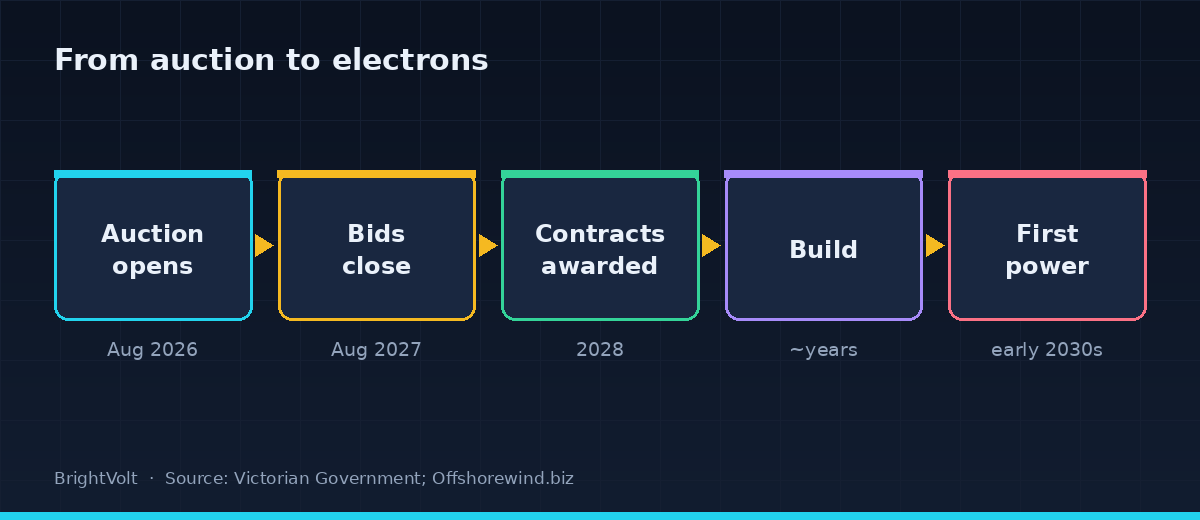
The auction is a request-for-proposal process that opened this month and closes in August 2027, with winning contracts awarded in 2028. Bidders are judged on price, deliverability, and benefit to local workers and communities, and the successful projects are folded into the national Electricity Services Entry Mechanism — a contract-for-difference in all but name, where the state guarantees a floor price and claws back the surplus when the market pays more. That single instrument is why any of this is financeable: fix a wind farm’s revenue for fifteen years and its cost of capital collapses.
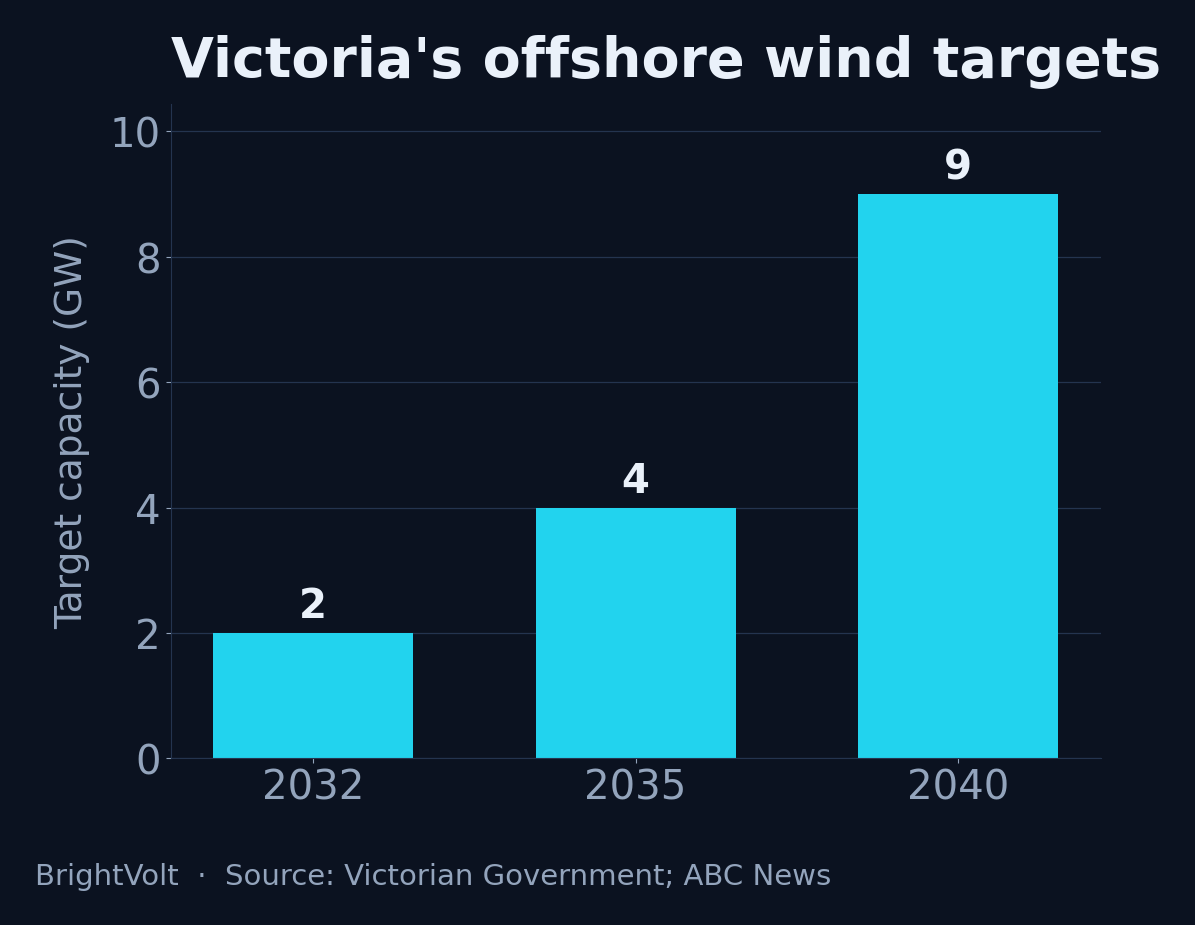
Nine developers already hold feasibility licences in the Gippsland zone, declared Australia’s first offshore wind area back in 2022. The most advanced by a distance is Star of the South, a project of up to 2.2 GW and 150 turbines sited at least 10 kilometres offshore, which alone would cover about 1.2 million homes and, at a reported US$5.4 billion, would be the largest single electricity project the country has ever built. The state puts the first round at over 6,000 jobs and “billions” in investment. The targets behind it climb steeply: 2 GW by 2032, 4 GW by 2035, and 9 GW by 2040.
Why offshore wind is the priciest wind there is
Start with the number the press release skips. Globally in 2024, the levelised cost of onshore wind was US$34 per megawatt-hour and utility solar US$43, on IRENA’s figures. Offshore wind was US$79 — more than double onshore, and the only one of the three whose cost went the wrong way, rising 4% on the year while onshore and solar kept falling.
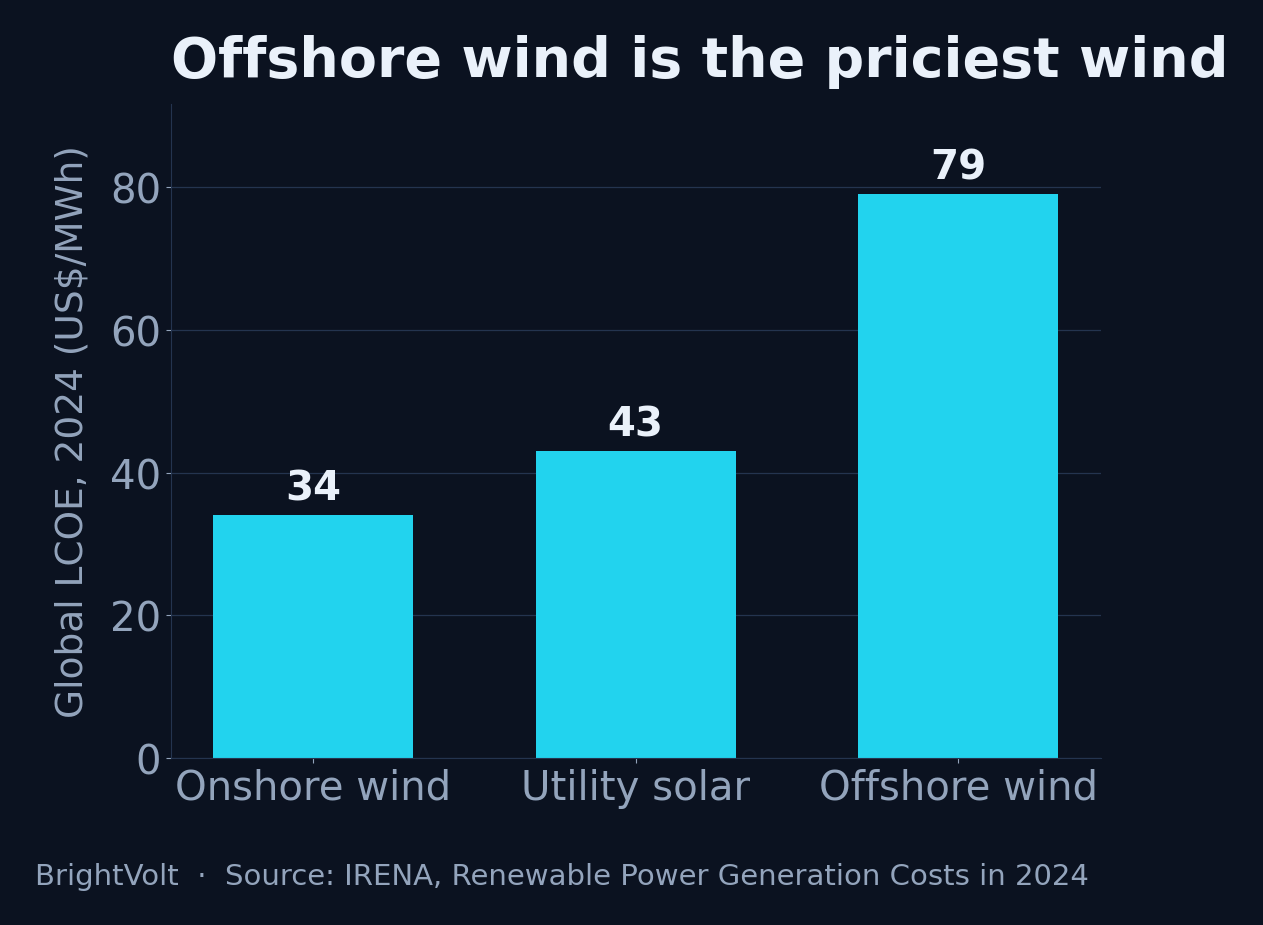
Offshore wind spent a decade getting 62% cheaper and has now stalled, squeezed by higher interest rates, steel and vessel costs, and a supply chain a country building its first project does not yet have. Australia’s own numbers point the same way. The CSIRO’s GenCost work has for years put onshore wind and solar as the cheapest new generation the country can build, at roughly AU$50–60/MWh, and does not expect Australia to deploy any offshore wind at all before 2030 — it enters the model as a 2030s and 2040s technology, not a this-decade one.
None of which makes offshore wind a mistake. It blows harder and more steadily than anything on land, it sits next to the coastal load centres, and a decarbonised grid running low on onshore sites will eventually need it. But it is the premium option, and Victoria is buying the premium option first.
The gap this is meant to fill, and can’t yet
The auction lands in the same fortnight AEMO’s connection data showed onshore wind — the cheap, proven kind — commissioning almost nothing. Of the record 9.1 GW of clean generation and storage Australia connected in the year to June, just 0.2 GW was wind, against the 18 GW the operator says the 2030 renewable target needs. That is the hole in the plan. Offshore wind cannot patch it.
The arithmetic of the timeline says so plainly. Bids close in August 2027, contracts land in 2028, and an offshore project then needs years of construction in a country with no offshore installation vessels, no assembled supply chain and one contested grid connection. Star of the South targets commercial operation in 2030 on its own reckoning, and it is the furthest along; the newer entrants will not deliver power until the middle of the decade at the earliest.
So the 2 GW put up this month is a bet on the 2032 target and the years beyond it — not a lever anyone can pull on the 2030 shortfall. The cheapest, fastest fix for a wind gap is more onshore wind, and that is precisely the thing that stopped getting built.
What could sink it
The state’s own auditor is already sceptical. In December 2025 the Victorian Auditor-General warned the government was unlikely to hit its offshore wind target because of delays — and the delays are not hypothetical. This auction was meant to run in September 2025 and slipped a year after the Port of Hastings assembly terminal was knocked back on environmental grounds and feasibility approvals ran late. An offshore wind farm needs a port to build turbines the height of skyscrapers, and Victoria’s preferred one does not yet exist.
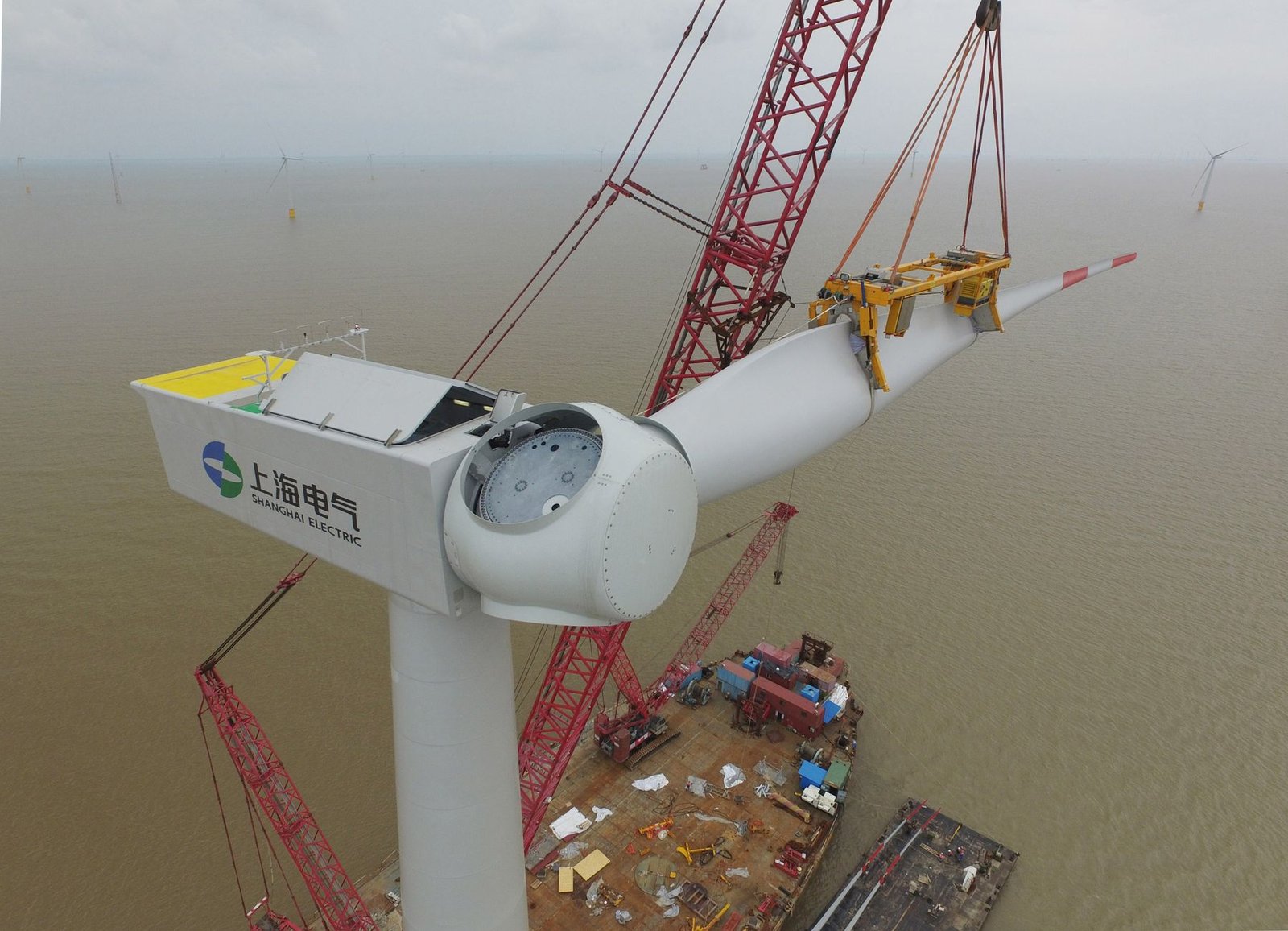
Then there is the election. Victorians vote in November, and the Coalition has pledged to scrap VNI West, the high-voltage transmission link the western renewables build-out leans on. Offshore wind’s dependence on new wires is the same binding constraint that strangled onshore: a turbine that cannot connect is a monument, not a generator. A change of government, or even a nervous incumbent, could unpick the transmission plan the whole auction assumes.
Watch the bid prices when they land. If they clear near firmed onshore wind rather than far above it, the premium is closing faster than the cost curves suggest, and the sceptical read here is wrong. Watch the port, and watch VNI West. Australia is right to start building an offshore wind industry now, because these things take a decade and the decade has to start somewhere. It is the pretence that a 2028 contract does anything for a 2030 target that will not survive contact with the calendar.
Photo by Damir K on Pexels · Photo by Greece-China News on Pexels