
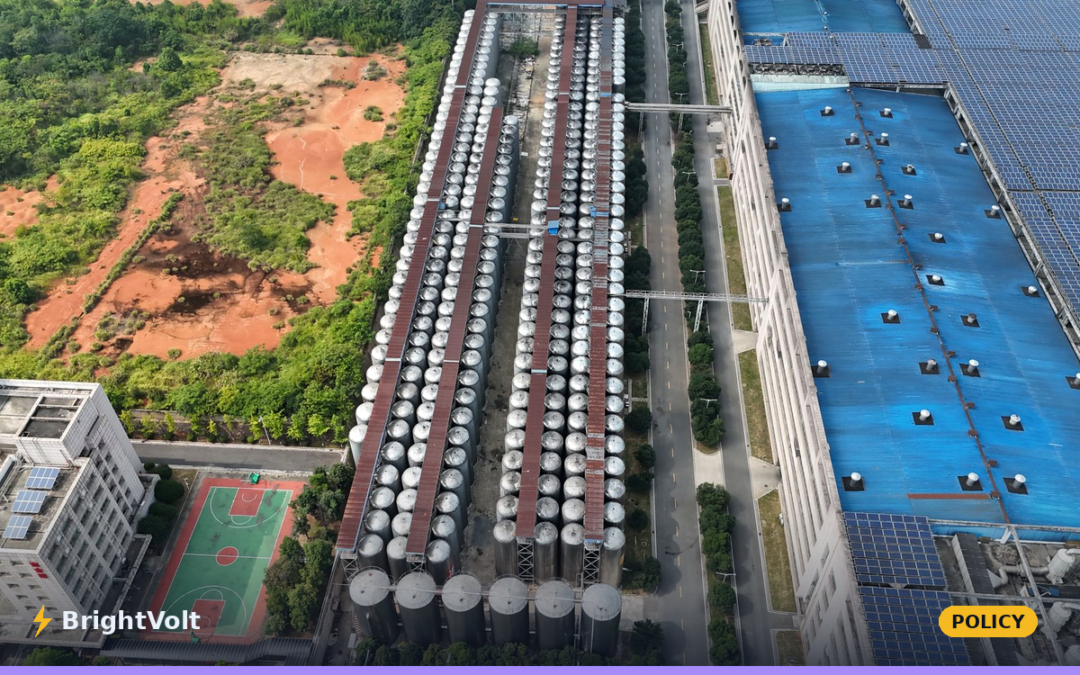
Australia has raised the ceiling on its upfront rooftop-solar rebate tenfold, from 100 kilowatts to one megawatt, as of 1 October 2026. The change extends a roughly 20% discount — about A$68,000 off a 250 kW system — to the commercial and industrial roofs that hold an estimated 80 gigawatts of untapped capacity. It is the first serious attempt to fix the strangest feature of the world’s most solarised grid: Australia has far more panels on its houses than on its factories.
What changed on 1 October
The lever is the Small-scale Renewable Energy Scheme (SRES), the mechanism behind Australia’s residential solar boom since 2011. Install a system and it creates small-scale technology certificates (STCs) upfront, which the installer sells and knocks off the sticker price — a point-of-sale discount, not a rebate you claim later. The catch, until now, was a hard eligibility line at 100 kW. Anything larger fell into the large-scale scheme, earning certificates per megawatt-hour over the system’s life instead of a lump sum at install — more paperwork, a power-station registration, and no capex cut on day one.
From 1 October that line moved to 1 MW. Systems between 100 kW and 1 MW can now take the upfront STC route, which the federal energy minister Chris Bowen puts at around a 20% cut to installation cost. The government’s worked examples: about A$68,000 off a 250 kW system, plus roughly A$50,000 a year in lower energy bills; about A$232,000 off an 850 kW system. One administrative wrinkle — applications for STCs on these mid-scale systems do not open until mid-to-late November, and the Clean Energy Regulator says a fixed five-year deeming period applies, so the short wait does not shrink the entitlement.
| System size | Upfront STC discount | Annual bill saving (govt estimate) |
|---|---|---|
| 100 kW — the old eligibility ceiling | none above this line | — |
| 250 kW | ~A$68,000 | ~A$50,000 |
| 850 kW | ~A$232,000 | not stated |
Why Australia’s rooftop solar is upside down
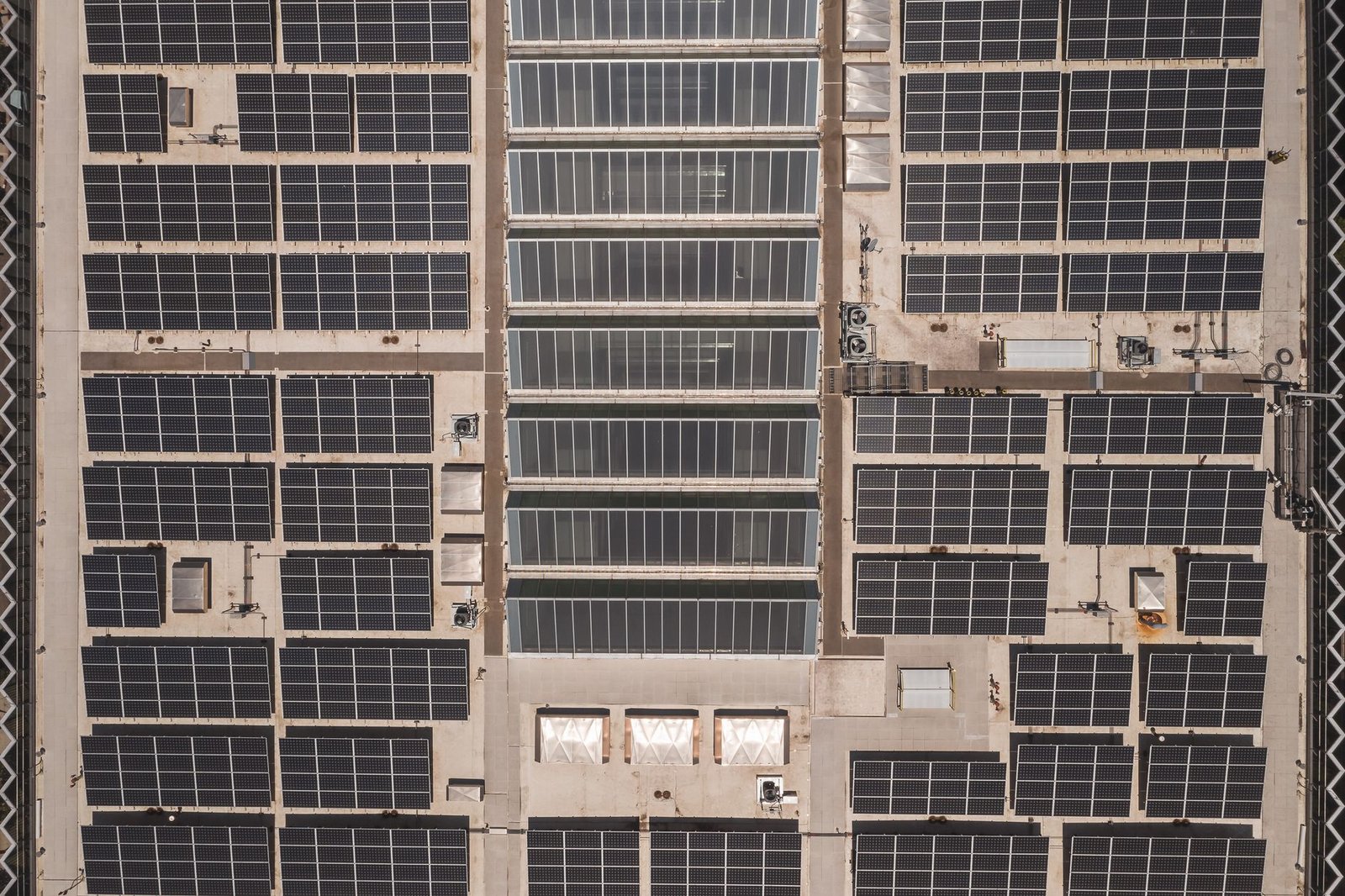
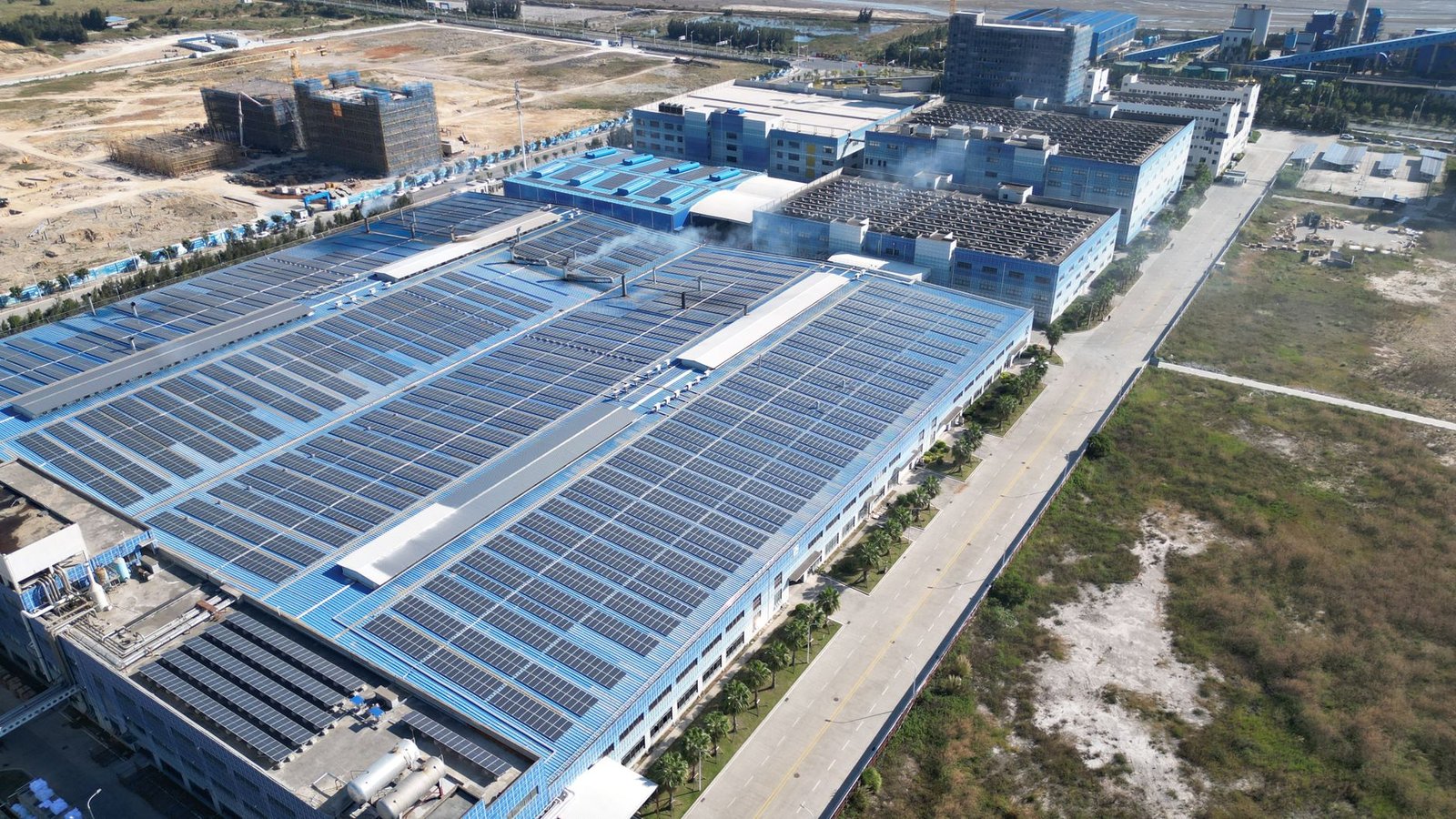
Most countries put solar on commercial roofs first — they are big, flat, unshaded, and sit under a daytime load that matches the generation. Australia did the opposite. Somewhere past 22 GW of rooftop solar sits on homes, across more than four and a half million of them — roughly a third of all Australian houses. On commercial, industrial and agricultural buildings, the figure is 5.6 GW. The larger, better-suited roof stock carries barely a quarter of what the housing stock does.
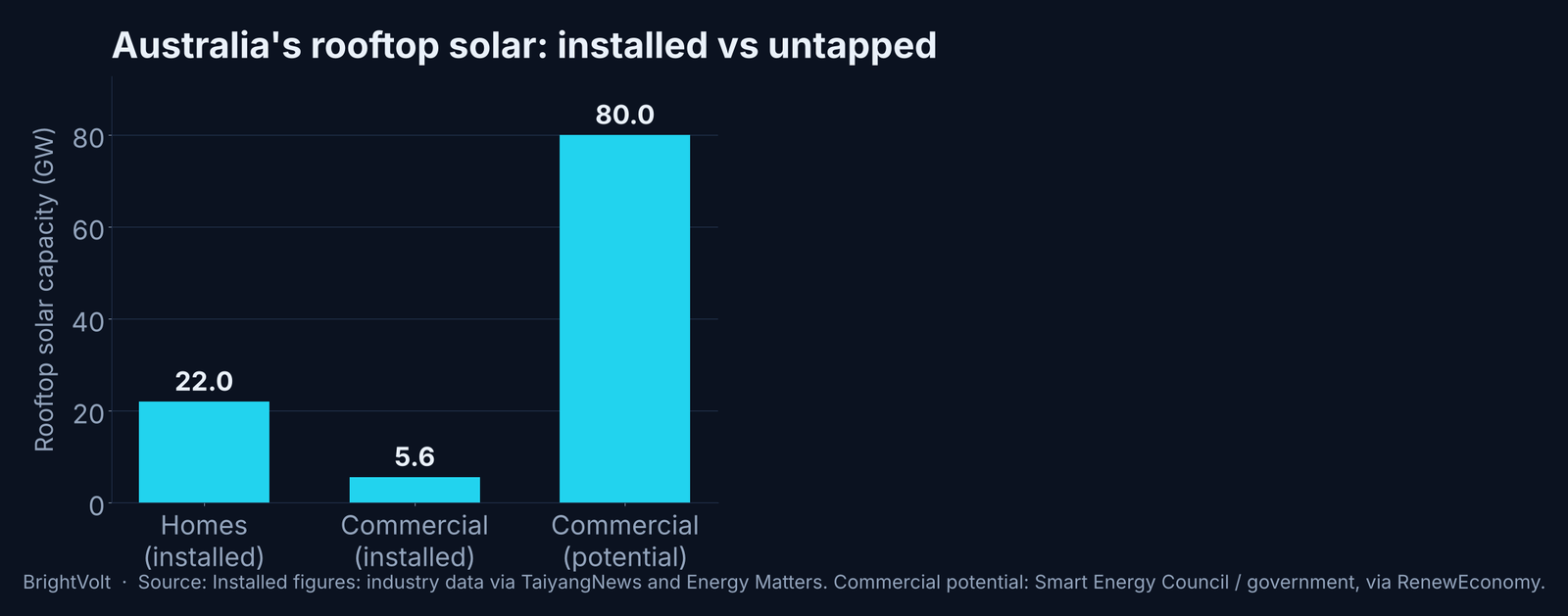
That inversion was not a quirk of taste. It was the 100 kW line. The upfront discount that made a home system a no-brainer stopped exactly where a warehouse roof begins, and the regime on the other side was built for utility-scale developers, not for a cold-store operator who wanted panels and a shorter payback. So the segment with the most roof and the best daytime match got the clunkier of the two schemes, and it lagged. The Smart Energy Council reckons the untapped commercial rooftop — the 80 GW the government is now chasing — is equivalent to the generating capacity of ten of Australia’s biggest coal-fired power stations, sitting idle above the businesses that would use it.
Upfront certificates versus the large-scale slog
The whole policy turns on one distinction that decides whether a business installs: when it gets paid, and in what form.
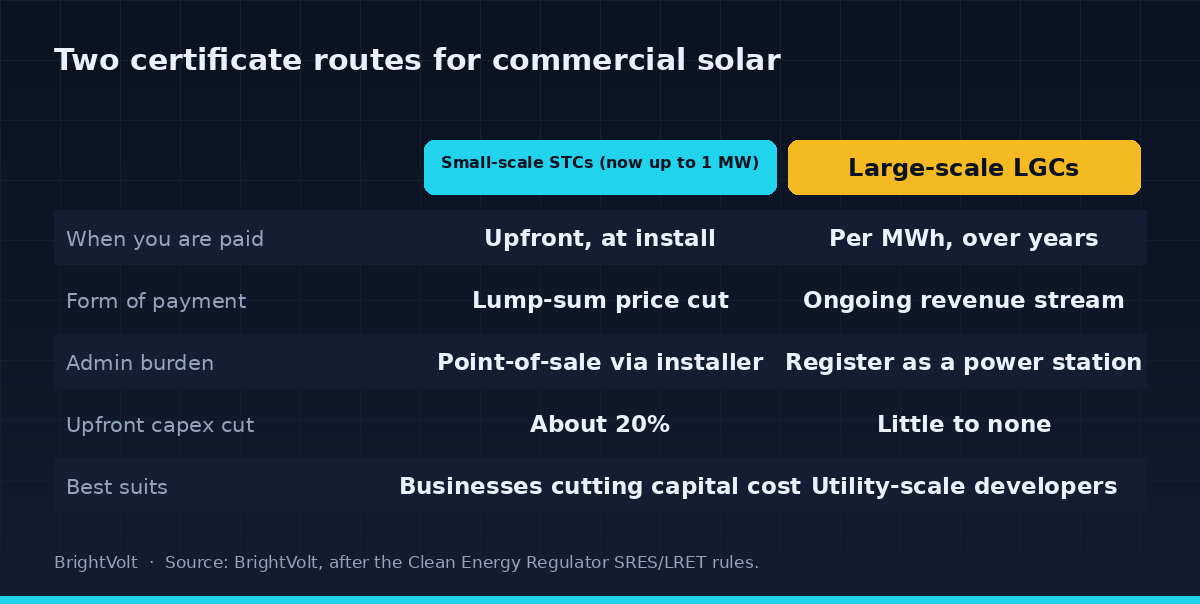
An STC is deemed and banked at install: the number of certificates is calculated from the system’s expected output over the deeming period, created in one hit, and sold — recently for around A$40 each — to cut the invoice. A large-scale certificate is earned the slow way, one per megawatt-hour actually generated, metered and claimed over years. For a developer running a solar farm, the slow way is fine; the project is financed on a long horizon. For a business weighing panels against every other call on its capital, the upfront cut is the thing that moves the decision, and until this month a 300 kW system could not have it.
That is also why the change lands hardest on behind-the-meter systems — solar sized to offset a building’s own consumption rather than to export. Commercial users pay demand charges and time-of-use tariffs that a well-sized rooftop array shaves directly, and the economics of self-consumed, behind-the-meter generation were already decent. Taking a fifth off the capital cost does not create the business case. It removes the reason to keep putting it off.
The early signal, and the catch
It is three weeks old, so the hard data is not in yet. The first read comes from installers: solar maker Trina Solar told RenewEconomy that the expansion is already lifting demand from commercial and industrial customers for larger systems paired with storage. Treat that as one supplier’s account rather than market data — but it points the way the incentive was designed to push.
The more telling context is what the policy sits beside. Australia’s residential solar subsidy went the other way this year: as the Cheaper Home Battery program’s support was trimmed, the average new home system shrank from about 12 kW toward under 10 kW, on Sunwiz figures cited by RenewEconomy. Read together, the two moves are a deliberate pivot. The home market is saturated — a third of houses, and new systems getting smaller — so the marginal public dollar is being steered off the roof it has already covered and onto the roof it has not.
Whether the 80 GW actually gets built is a different question, and the rebate is only the first obstacle removed. Three others remain. Split incentives: on a leased warehouse, the landlord owns the roof and the tenant pays the power bill, and neither alone captures the return. Suitability: a lot of older industrial roofing cannot take the load or the penetrations without strengthening. And grid connection — a 1 MW behind-the-meter system is a serious piece of kit, and network approval to install it, let alone export from it, is not a rubber stamp. The upfront discount is necessary. It is not, on its own, sufficient.
Watch the Clean Energy Regulator’s STC data once mid-scale applications open in November, and the commercial install figures through 2027. If the segment is unlocking, the 5.6 GW number should start closing on the 80 GW above it. If it flatlines while STCs for sub-100 kW systems keep ticking over as before, the barrier was never the rebate — it was the roof, the lease and the connection queue, and a cheaper system does not move any of those.
Photo by CHINA YU on Pexels · Photo by RDNE Stock project on Pexels · Photo by Nova lv on Pexels