
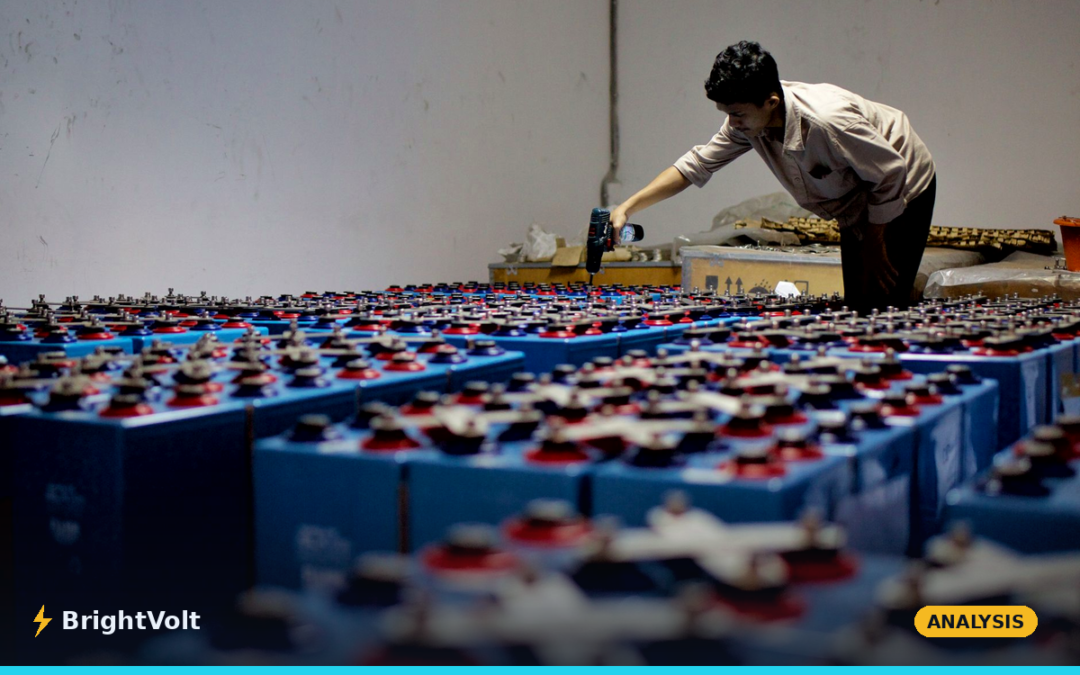
Saudi Arabia has signed $1.16 billion in contracts for 2,000 MW of grid batteries, each site holding four hours of storage, for a combined 8 GWh. The offtaker, the state’s Saudi Power Procurement Company, has agreed to pay for them for fifteen years whether they cycle daily or barely at all. That last detail is the story. The kingdom that produces eleven million barrels of oil a day is buying batteries the way a utility buys a gas plant — as firm capacity, on a fixed contract — because the fuel those batteries displace is worth more sold abroad than burned at home.
What Saudi Arabia actually bought
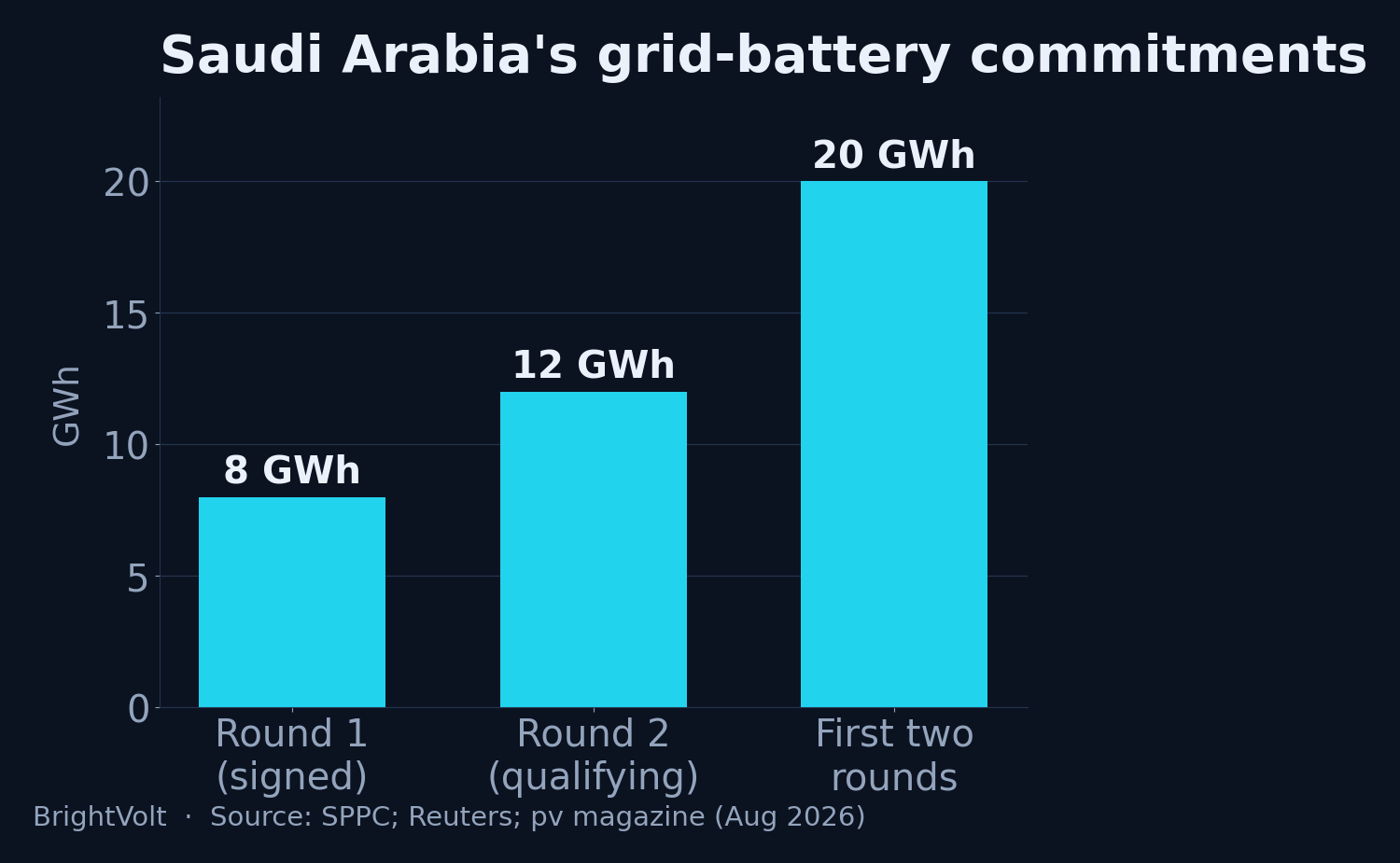
Four projects, 500 MW and 2 GWh apiece, awarded under the first round of the Saudi Power Procurement Company’s storage programme and signed in Riyadh on 21 August. Three go to a consortium of Saudi Energy Company, ACWA Power and Al Sharif Contracting; the fourth to ENGIE with Haji Abdullah Alireza & Company. Each carries a 15-year Storage Services Agreement with SPPC — a build-own-operate deal where the developer finances and runs the asset and the state pays a fixed fee for its availability.
| Project | Region | Power | Energy | Developer |
|---|---|---|---|---|
| Al Muwayh | Makkah | 500 MW | 2 GWh | Saudi Energy Co / ACWA Power / Al Sharif |
| Haden | Makkah | 500 MW | 2 GWh | Saudi Energy Co / ACWA Power / Al Sharif |
| Al Kahafa | Hail | 500 MW | 2 GWh | Saudi Energy Co / ACWA Power / Al Sharif |
| Al Khushaybi | Qassim | 500 MW | 2 GWh | ENGIE / HAACO |
One figure is worth pinning down, because the coverage disagrees on it. Some outlets reported the round as 6,000 MWh. The developers, Reuters and the offtaker all describe four 500 MW sites at four hours each, which is 8,000 MWh. Four times two is eight. The 6,000 number appears to be an error, and it matters, because a third of the fleet’s energy is the difference between covering the evening peak and coming up short.
This is not a one-off. A second round is already in qualification — 3,000 MW and 12 GWh across six more projects. Taken together the first two rounds commit Saudi Arabia to 5,000 MW and 20 GWh of grid storage, from a base of almost nothing two years ago.
Why an oil exporter is buying batteries
Saudi Arabia burns a remarkable share of its own product. In 2024 the kingdom consumed roughly 3.5 million barrels a day domestically out of about 11 million produced, a large slice of it crude fed straight into power stations to run air conditioning through the summer. Domestic electricity demand sits near 171 TWh a year and climbs every June. Every barrel that meets that demand at home is a barrel not sold on the export market at seventy-odd dollars.
That is the arithmetic behind Vision 2030’s target of 50% renewable power by 2030, and behind the Liquid Fuel Displacement Programme’s aim to strip more than a million barrels a day out of domestic burn. Solar is the obvious tool — the Empty Quarter has few better uses — and Saudi has raced from a standing start to 12.3 GW of renewables installed by mid-2025, chasing a 2030 target somewhere between 100 and 130 GW.
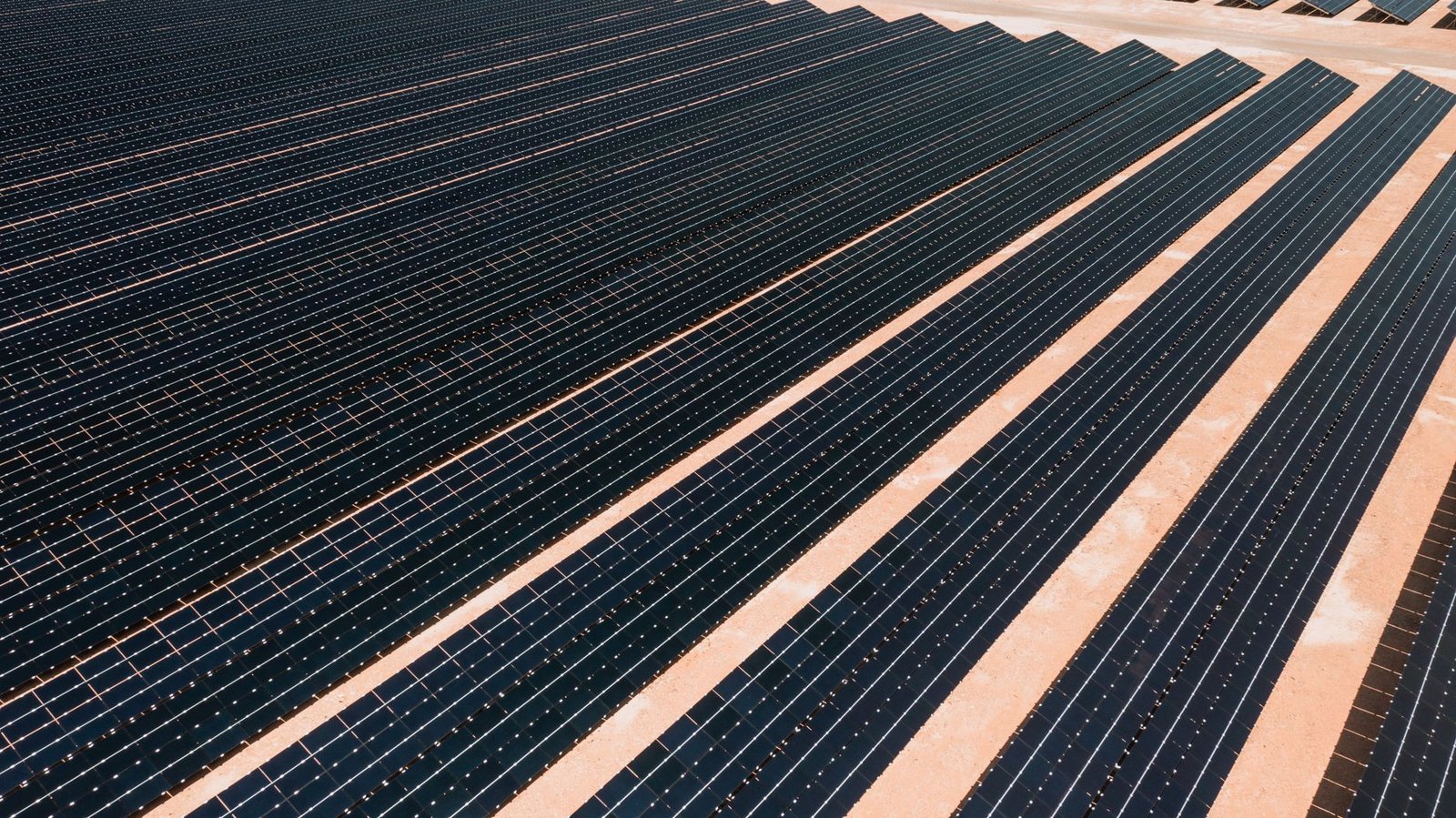
But solar in a desert has the same problem it has everywhere. It generates at midday and stops in the evening, and Saudi Arabia’s demand peaks in the evening, when the sun is down and the air conditioners are still running. Without storage, a solar build-out that large just means curtailed panels at noon and gas or oil peakers at dusk. The batteries are what convert a midday glut into a dispatchable evening supply. Four hours is enough to carry the sunset ramp; it is not enough to carry a windless week, and it is not meant to.
The number that makes it work
Divide the money by the energy and the first round implies about $145 per kWh of installed storage. That figure needs a caveat — $1.16 billion is the whole build-own-operate investment, so it folds in grid connection, land, financing and fifteen years of developer margin, and the bare hardware sits below it. Even so, it is a useful yardstick, and the yardstick says something has changed.
Two years ago that price would have been implausible. BloombergNEF put the 2025 global average for a four-hour turnkey system at $110/kWh, the lowest since its survey began and down 31% in a single year. The regional spread is the interesting part: China averaged $73/kWh, Europe $177, and the United States $219. Saudi’s implied $145 sits closer to the global average than to the American number — and the reason is not subtle.
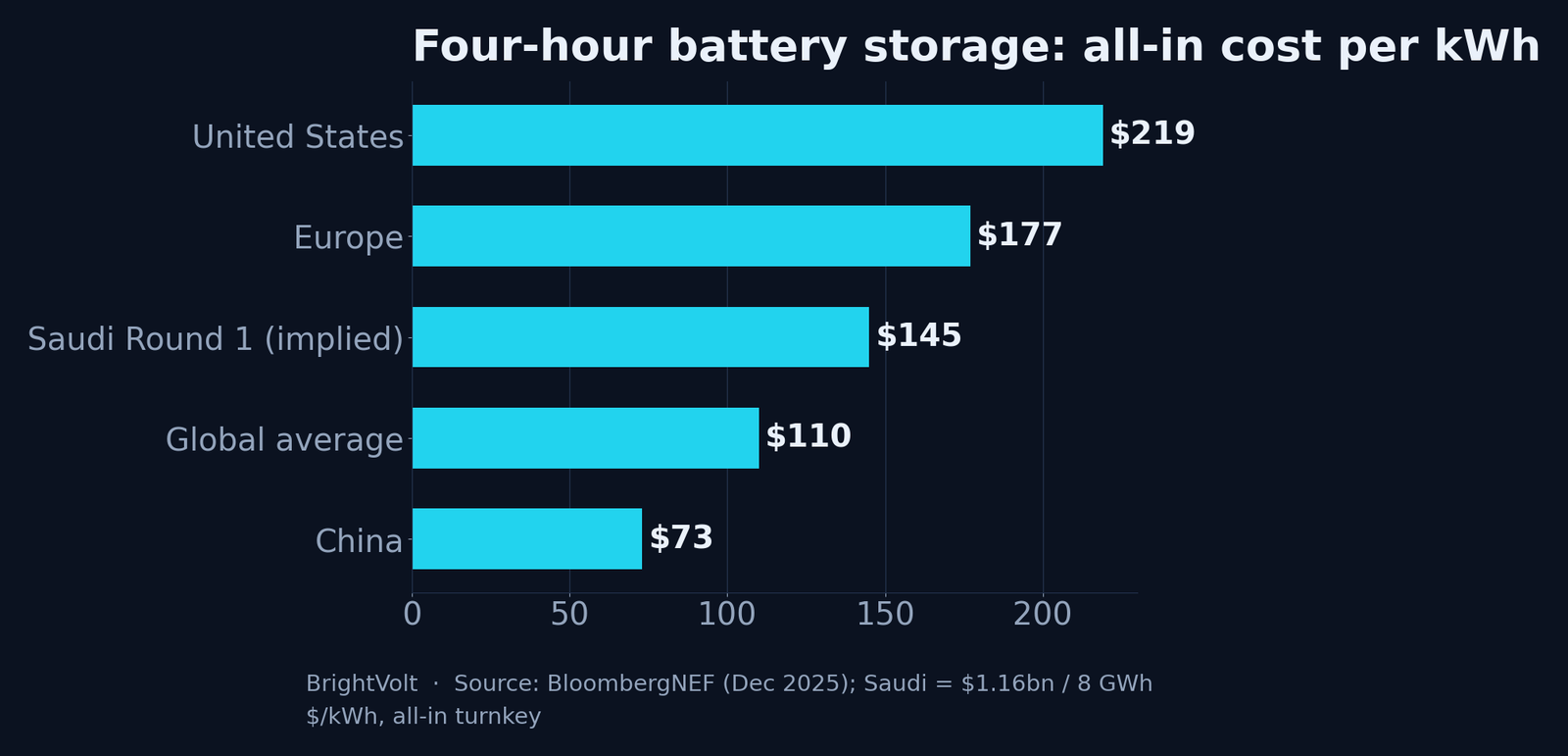
Saudi buys Chinese LFP cells, which Ember pegged near $40/kWh at the end of 2025, without the tariffs and domestic-content rules that push a US project toward $219.
There is a quiet lesson in that gap for anyone watching Washington. The United States is reshoring LFP manufacturing behind a tariff wall at the same moment its storage subsidies are being withdrawn, and it pays half as much again per kilowatt-hour as the global market. Saudi Arabia, with no such constraints and a sovereign balance sheet behind the offtake, buys at the going rate and books the savings as exportable crude.
Capacity, not energy
The 15-year fixed contract is the tell. A merchant battery earns its keep by trading — charging when power is cheap, discharging when it is dear, and living or dying on the spread. A battery on a Storage Services Agreement does none of that. It is paid an availability fee to be there when the system operator needs it, and the operator, not the owner, decides when it runs. In other words, it is being bought as firm capacity to stand in for a peaker plant, not as an arbitrage machine.
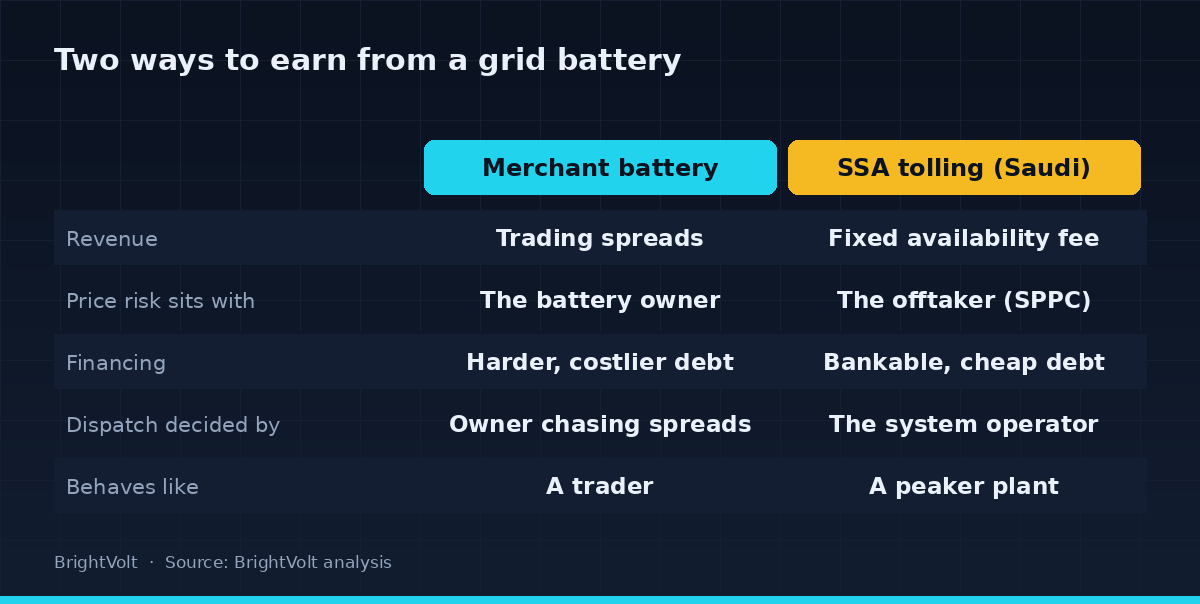
That structure is why these projects get financed at all. A fixed fifteen-year revenue line is bankable in a way that merchant trading spreads are not, which lowers the cost of debt, which is a large part of why the all-in number lands where it does. It also changes what the battery has to be worth to the grid: not energy shifted, but capacity that can be counted on during the peak — and at four hours, a battery earns close to full capacity credit for an evening ramp while earning almost none for a multi-day lull.
The distinction between merchant and contracted storage is not academic. It decides who carries the risk, how cheaply the thing can be built, and whether a wave of announcements turns into a wave of concrete.
What to watch
The second round is the test. If SPPC awards its next 12 GWh on the same fixed-fee tolling model, Saudi Arabia will have established grid storage as a standard capacity product bought on long contracts — the same shift the Gulf already ran through solar, where a decade of record-low auction prices came out of exactly this structure. Watch, too, whether the durations stay at four hours. A move to six or eight would signal the kingdom is planning to shift bulk solar energy across the day rather than merely firm the evening peak, and that is a more expensive ambition than anything signed this month.
What would undercut the read here is simple to state. If these batteries end up trading merchant rather than sitting on their fixed fee, or if the second round comes in materially more expensive than the first, then the story is just another procurement round rather than the moment cheap storage became a lever on oil exports. On the evidence signed in Riyadh, it is the lever.
Photo by Heru Dharma on Pexels · Photo by K on Pexels