
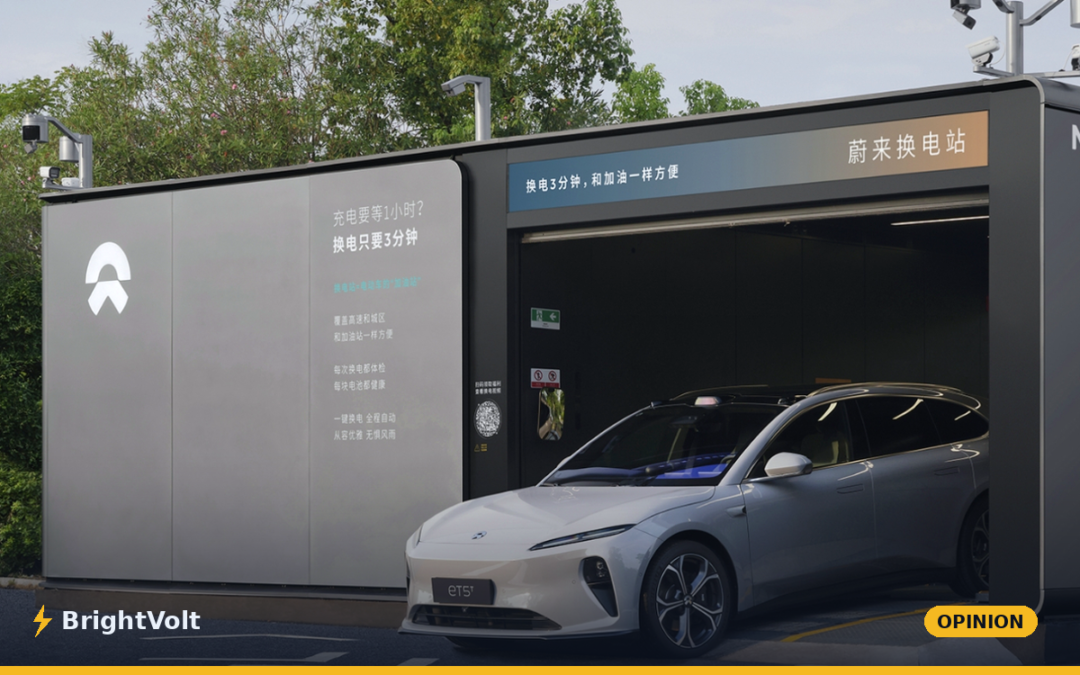
Geely is buying 30% of Nio’s battery-swapping arm at a valuation of about 16 billion yuan ($2.2 billion), and the market is reading it as the moment car battery-swapping finally cleared the problem that has always defined it: nobody else’s cars can use the stations. That is not what the deal does. It is two loss-making companies pooling infrastructure to survive a price war, and the only swapping in it that actually works is the part almost nobody is talking about.
Announced on 28 September, the transaction has Geely take a 30% stake in Nio Power — the swapping-and-charging subsidiary Nio carved out earlier this year — by folding in its own commercial-vehicle swapping operator, Yiyi Internet Technology, plus 640 million yuan in cash. In return Nio takes 10% of Geely’s charging subsidiary, Haohan Energy. The two will interconnect their charging networks and, the press releases say, “develop unified consumer-facing battery-swap technologies and standards.”
What the deal actually moves
Strip out the language about standards and the deal is mostly a reshuffle of assets that already exist. Geely’s cash contribution — 640 million yuan — is a rounding error against what Nio has already spent. Nio has poured more than 20 billion yuan into charging and swapping infrastructure, and the deal values the whole subsidiary that holds it at around 16 billion. Geely is not writing a cheque that changes Nio Power’s trajectory. It is swapping its own swap business in for a share of a bigger one.
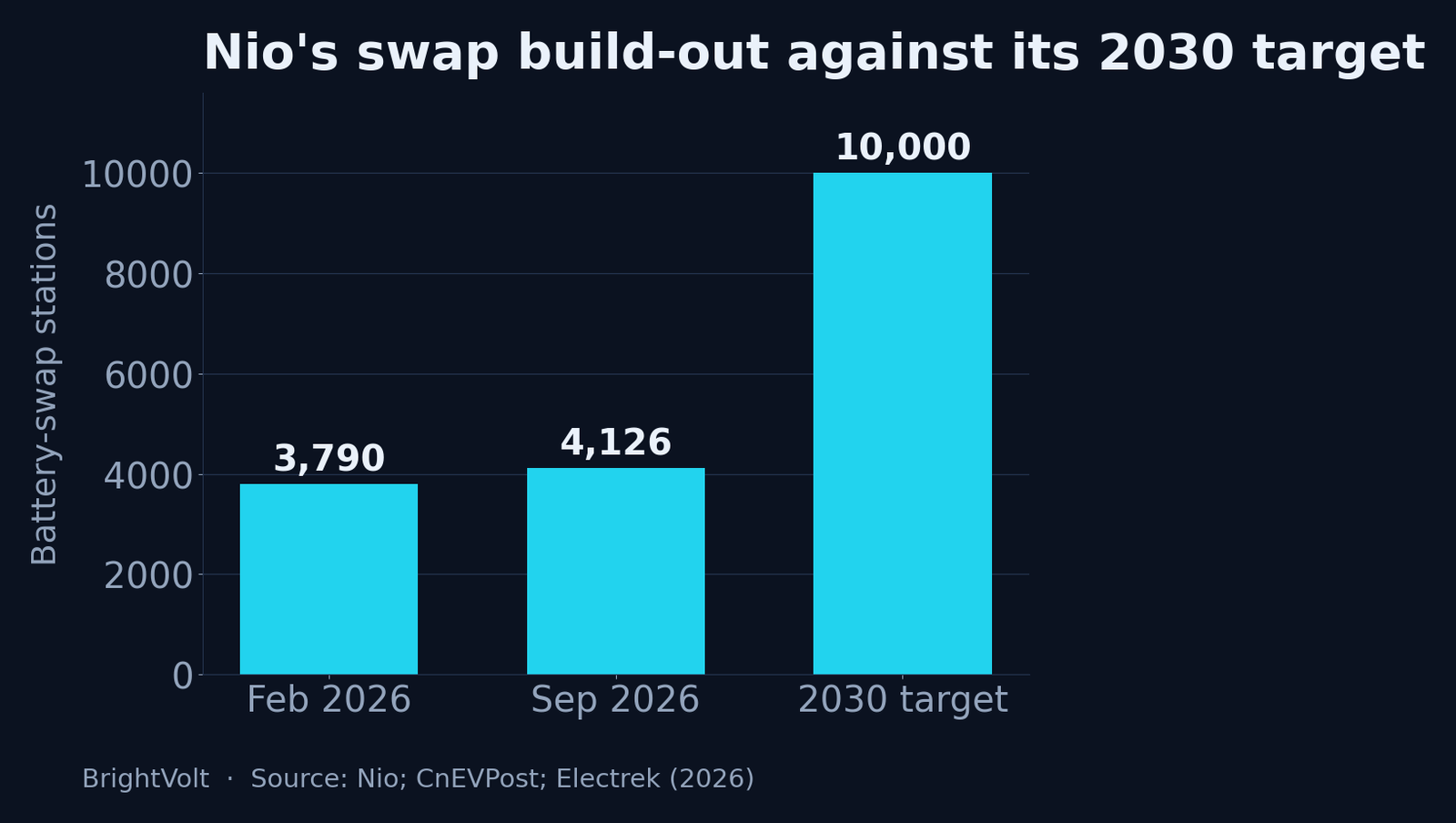
The network it is buying into is large and still short of where Nio needs it. Nio runs 4,126 swap stations today, up from 3,790 in February, and it is aiming for 10,000 by 2030 — a pace that has added a few hundred stations in seven months against a target that needs thousands more.
That matters because the number everyone quotes — a 16 billion yuan valuation, 30% for Geely — makes this sound like an outside investor betting on swapping. It is closer to the opposite. After the deal, Nio China still controls 63.6% of Nio Power, Geely holds 30%, and a Wuhan venture fund the remaining 6.4%. Nio keeps the network, keeps the burn, and gets a co-owner who happens to run the one kind of swapping station that pays for itself.
The financial pressure behind it is not subtle. Nio still lost 528 million yuan on a GAAP basis in the second quarter even as vehicle margins recovered to 18.5%, and Chinese carmakers are fighting a price war that has pushed industry margins to just above 4%. The executives involved described the logic plainly: stick together to survive. That is the honest frame for this deal. It is defensive.
Nine partners, three years, zero swap-compatible cars
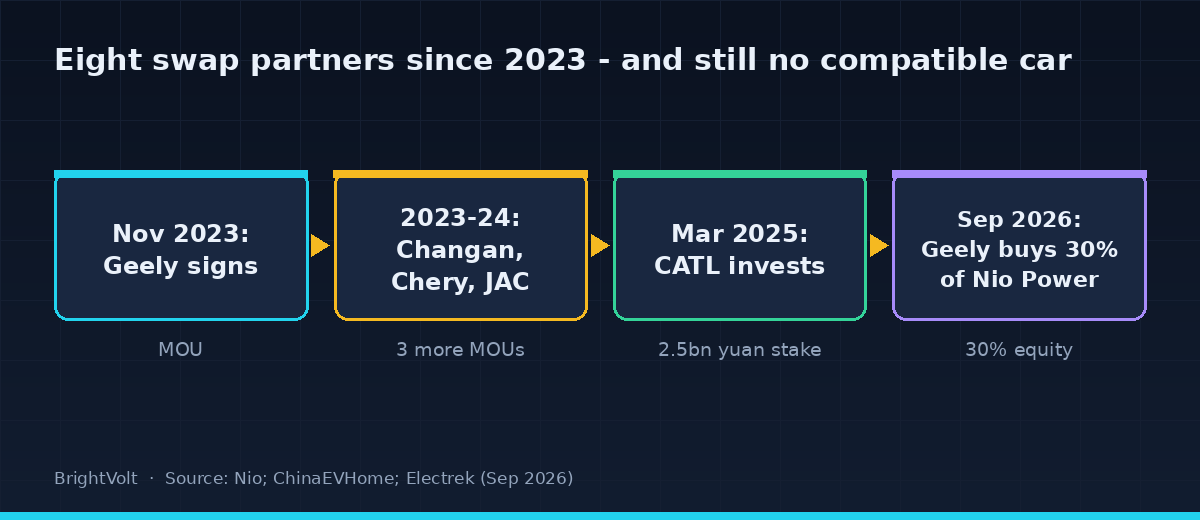
Here is the fact that the standardisation story has to explain away. Nio has been signing battery-swap “cooperation agreements” with other carmakers since November 2023 — Geely first, then Changan, Chery and JAC, then GAC, FAW and Lotus, and in March 2025 a 2.5-billion-yuan investment from CATL. That is eight partners over three years. In that time, not a single one has put a mass-production car on the road that can use a Nio swap station. The only Chinese brand that has actually shipped swap-compatible passenger cars, Aion, built them for CATL’s competing standard instead.
This is the wall we described when we argued why battery swapping works for scooters but not cars: the pack is the most expensive and most differentiating component in the vehicle, and a shared swap network only works if every participating carmaker freezes its pack dimensions, chemistry envelope and interface to a common spec — and then stops innovating on the thing they most want to compete on. A scooter battery is a 10-kilogram commodity nobody markets. A car battery is the product. Three years of MOUs producing zero compatible cars is not a coordination delay. It is carmakers reading the same trade-off and declining it, one after another.
An equity stake does not repeal that logic. It gives Geely a financial reason to want compatible cars, which the earlier memoranda did not. But wanting is cheap. The test is whether a Geely passenger model actually launches with a Nio-standard pack and sells in volume, and nothing in the deal commits Geely to that. What Geely committed is its commercial-fleet swapping arm — which is a different business entirely.
The one part that works is the commercial fleet
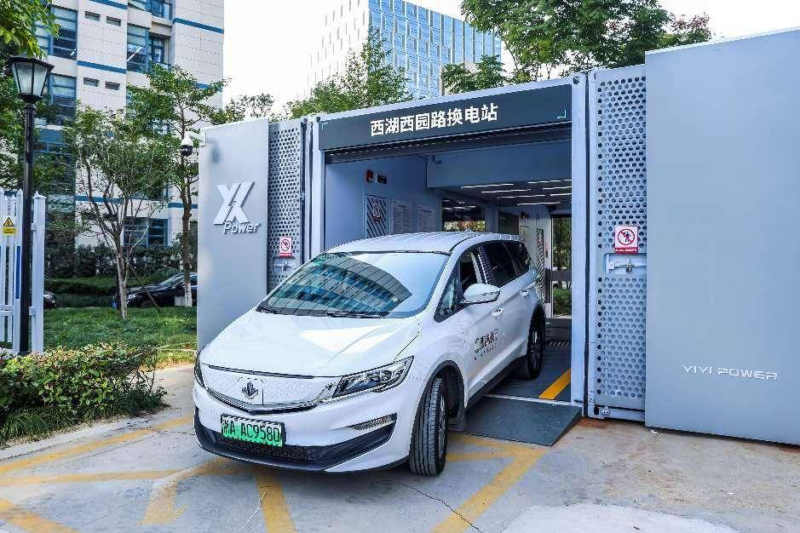
Yiyi Internet Technology runs a few hundred swapping stations for commercial vehicles — taxis and ride-hailing cars that run fixed routes, return to known depots, and burn through batteries fast enough that minutes of downtime have a price. That is the duty cycle swapping was always built for, and it is the same argument that explains why mines, ports and delivery fleets electrify before private cars: when the route is fixed and the vehicle earns money by moving, standardising the energy source is worth more than owning it.
Fleet operators also solve the standardisation problem by fiat. A taxi company buys a thousand identical cars and one swap contract; there is no consumer choosing a rival pack. Geely’s commercial swapping business works for exactly the reasons its passenger business would not, and the most telling thing about this deal is which half of it is already profitable. Nio is buying the part of Geely that proves swapping’s real market is narrower than the pitch, while hoping the equity tie finally cracks the part that never has.
| Nio’s consumer network | Yiyi’s commercial fleet | The mass-market pitch | |
|---|---|---|---|
| Who owns the pack | Nio (leased to driver) | Fleet operator / network | Would require every carmaker to give it up |
| Standardisation | One brand’s spec | One operator, identical cars | Eight partners, no shared spec in 3 years |
| Route | Anywhere | Fixed, depot-based | Anywhere |
| Utilisation | Uneven, low off-peak | High, predictable | Uneven |
| Works today | At a loss | Yes | No |
The strongest case for the deal — and why it still doesn’t clear the wall
The best argument for the optimists is that equity is not an MOU. Geely has put capital and its own infrastructure on the table, so it now shares Nio’s incentive to make swapping succeed, and a shared network with two committed backers is more credible than one carmaker’s proprietary moat. That is real, and it is why this deal is more than the eight that preceded it.
It still runs into two facts. First, there is no single standard to converge on: CATL is building a rival swap ecosystem with its own backing, and Aion already chose it, so “standardisation” in Chinese swapping currently means at least two incompatible camps, not one. A second large network does not end that split; it entrenches it. Second, Geely’s binding commitment is the commercial arm, not a passenger-car pack freeze. Until a Geely showroom model ships on a Nio-compatible battery, the deal has changed the ownership of the network without changing the reason carmakers have avoided it.
What would change the read
Watch for one thing: a Geely-badged, mass-market passenger car that launches swap-native on the Nio standard and sells in real volume — not a concept, not a fleet-only variant, a car a private buyer picks off a forecourt. If that ships in the next 18 months, the equity tie will have done what nine memoranda could not, and we will have been wrong about how firmly the pack-standardisation wall holds for passenger cars. If instead the deal delivers interconnected charging, a healthier balance sheet for Nio Power, and more commercial-fleet swapping — but the passenger cars stay incompatible — then this was consolidation wearing a standardisation headline, and the wall is exactly where we left it.
Image: NIO