
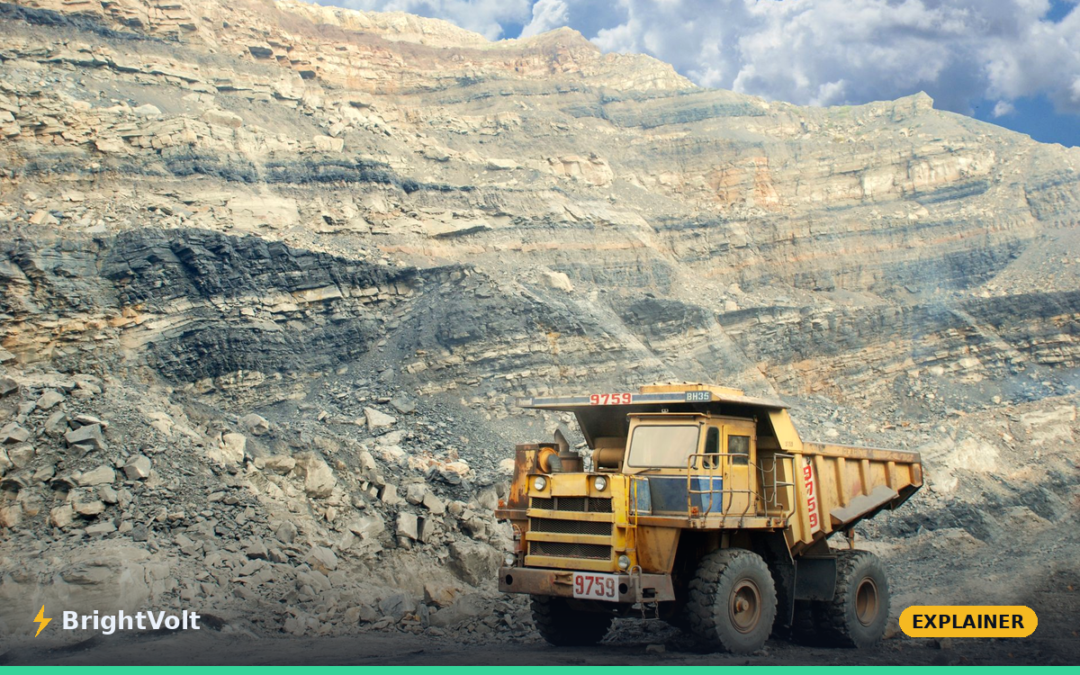
A single diesel mine haul truck can burn through more than $850,000 of fuel in a year while never leaving a fixed loop inside the pit. That combination — an enormous fuel bill and a completely predictable route — is why the vehicles electrifying fastest on pure economics are ones most people never picture when they think “EV”: haul trucks, port equipment, buses and delivery vans, not the family car. The car is the hard case, not the easy one.
What a vehicle actually needs to electrify on economics
Three things, and a passenger car has none of them in the right measure. It needs a predictable route, so a battery can be sized to the day’s work rather than to the worst imaginable trip. It needs to return to a fixed base, so charging is a solved problem rather than a search for a plug. And it needs to burn a lot of fuel, because the saving from switching scales with the diesel displaced, and a vehicle that barely runs barely saves.
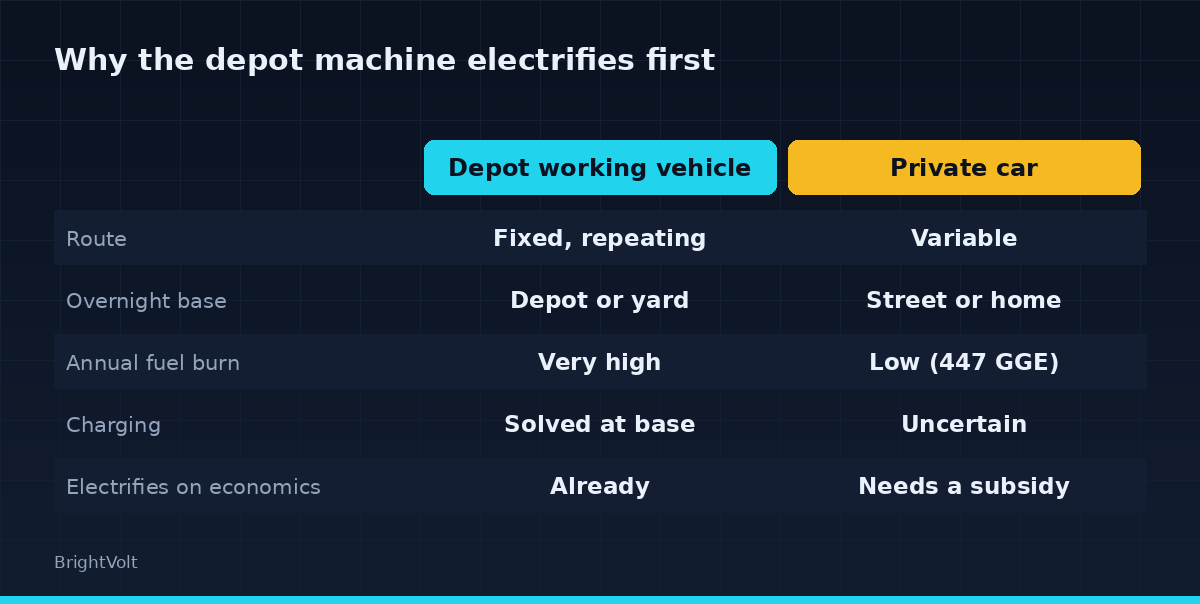
Heavy working vehicles pass all three tests. Passenger cars fail all three. The average American household vehicle is parked 95% of the time on a typical day, wanders a different route most trips, and sleeps wherever the owner can find a kerb. It also sips fuel by comparison. Federal fuel-use data puts an average car at about 447 gallons-equivalent a year; a transit bus burns 9,277 and a Class 8 truck 9,752 — more than twenty times as much, each. Electrify one bus and you displace the diesel of twenty cars, from a vehicle that comes home to the same depot every night.
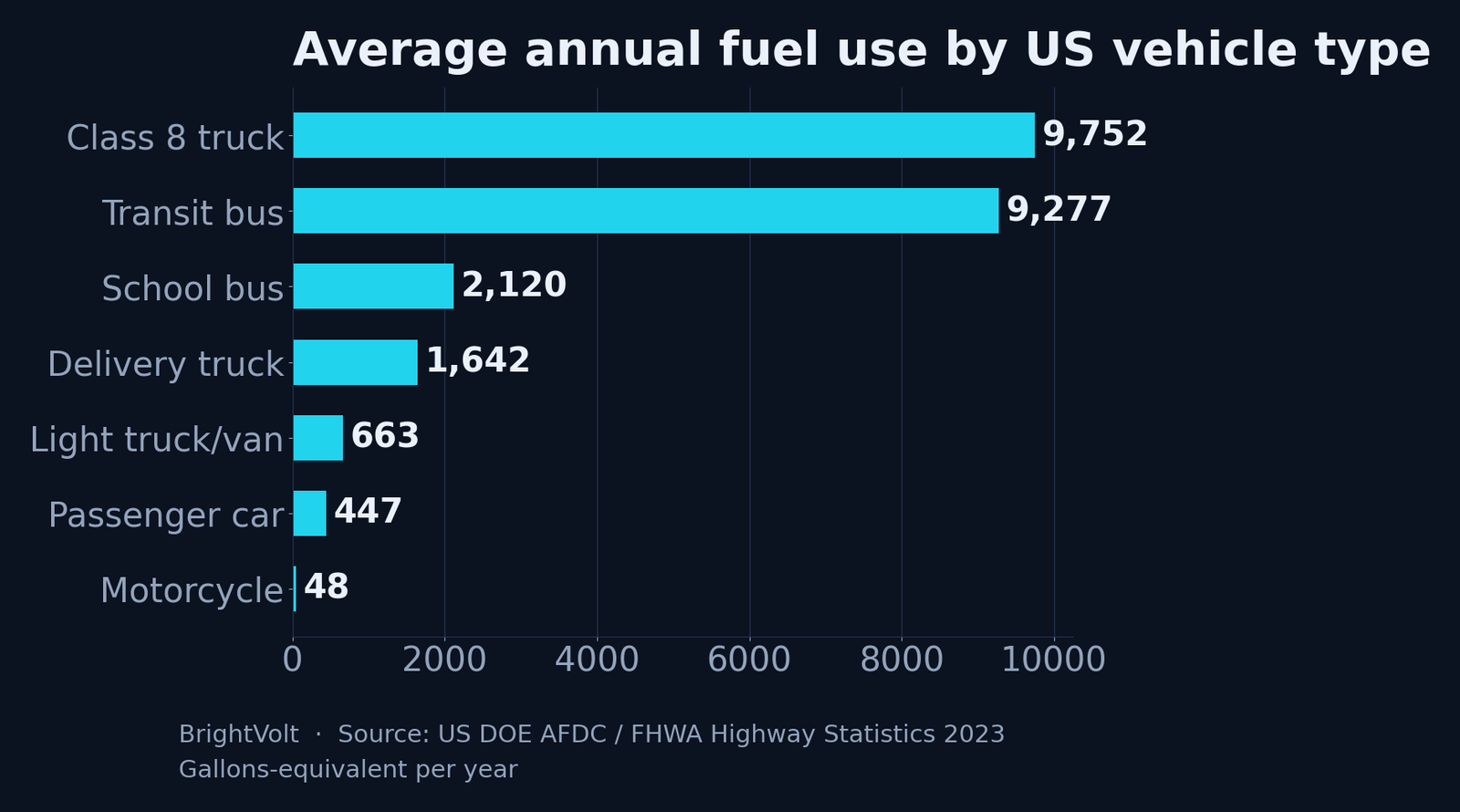
That is the whole argument in one chart. The vehicles worth electrifying first are the ones that burn the most and roam the least, and almost none of them are cars.
The mine is the clearest case in the world
A large open-pit mine is very nearly a machine designed to be electrified. The haul trucks run 24 hours a day on fixed roads between a loading face and a dump point, they return to the same places on every cycle, and the diesel they drink has to be trucked up to a remote site at a premium. Nothing about that duty cycle rewards a fuel tank; everything about it rewards a battery and a fixed charger.
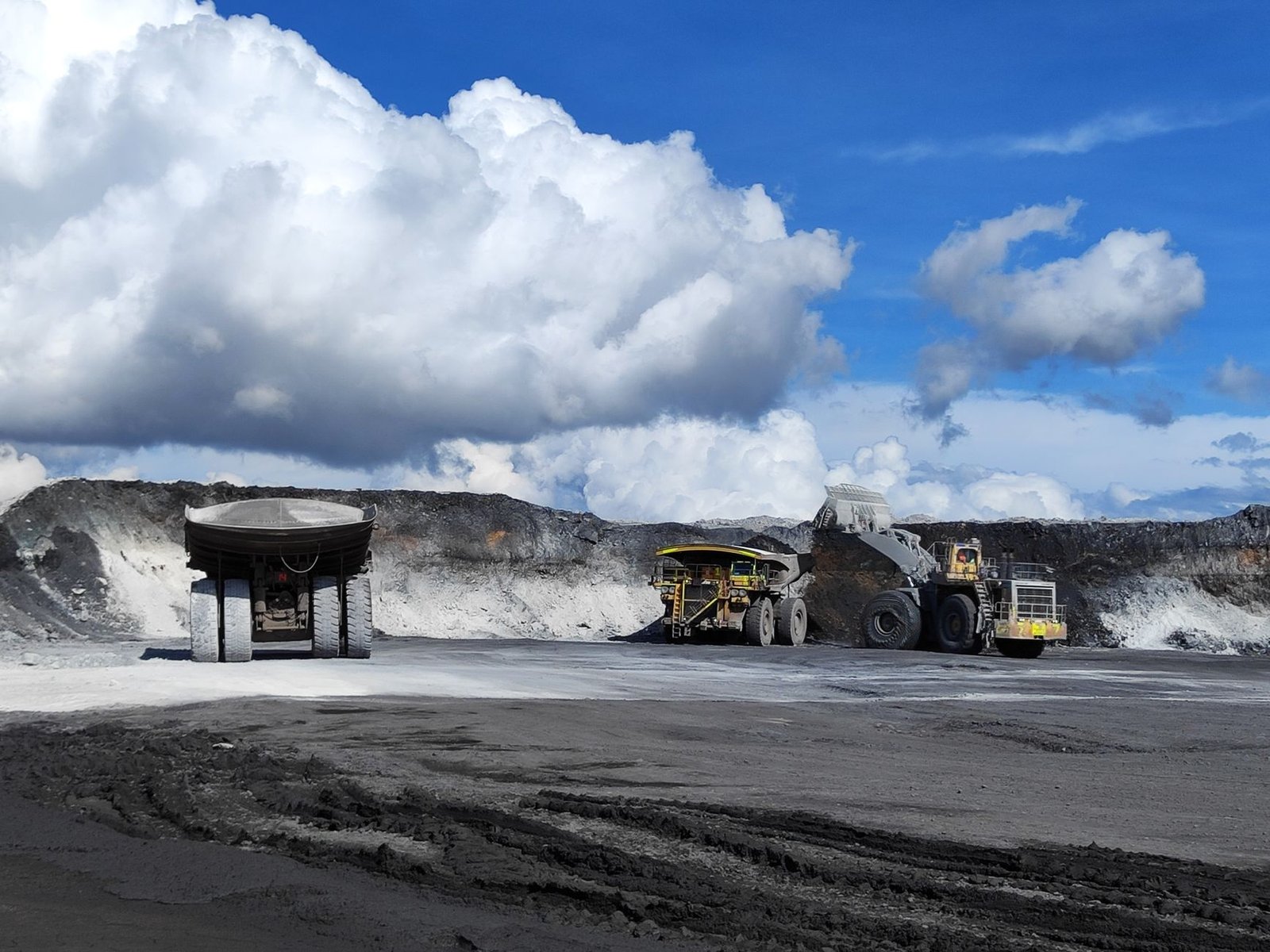
Which is why the biggest single order in the business is not for cars. Fortescue, the Australian iron-ore major, is spending about $4 billion to electrify its haulage, including 360 Liebherr T264 battery trucks. Each carries a 3.2 MWh battery — roughly fifty times the pack in an electric car — and takes a charge from a 6 MW connector in about half an hour, the kind of megawatt-scale charging that passenger networks are only now reaching for. The company puts the fuel saving at $300–400 million a year across the fleet, because a single 150-tonne diesel haul truck gets through more than $850,000 of fuel annually on its own. There is a neat bonus the pit gives away for free: a loaded truck spends much of its day descending with 240 tonnes of ore, and a battery truck recovers energy on the way down that a diesel simply turns into brake heat.
Ports and depots run the same logic on the road
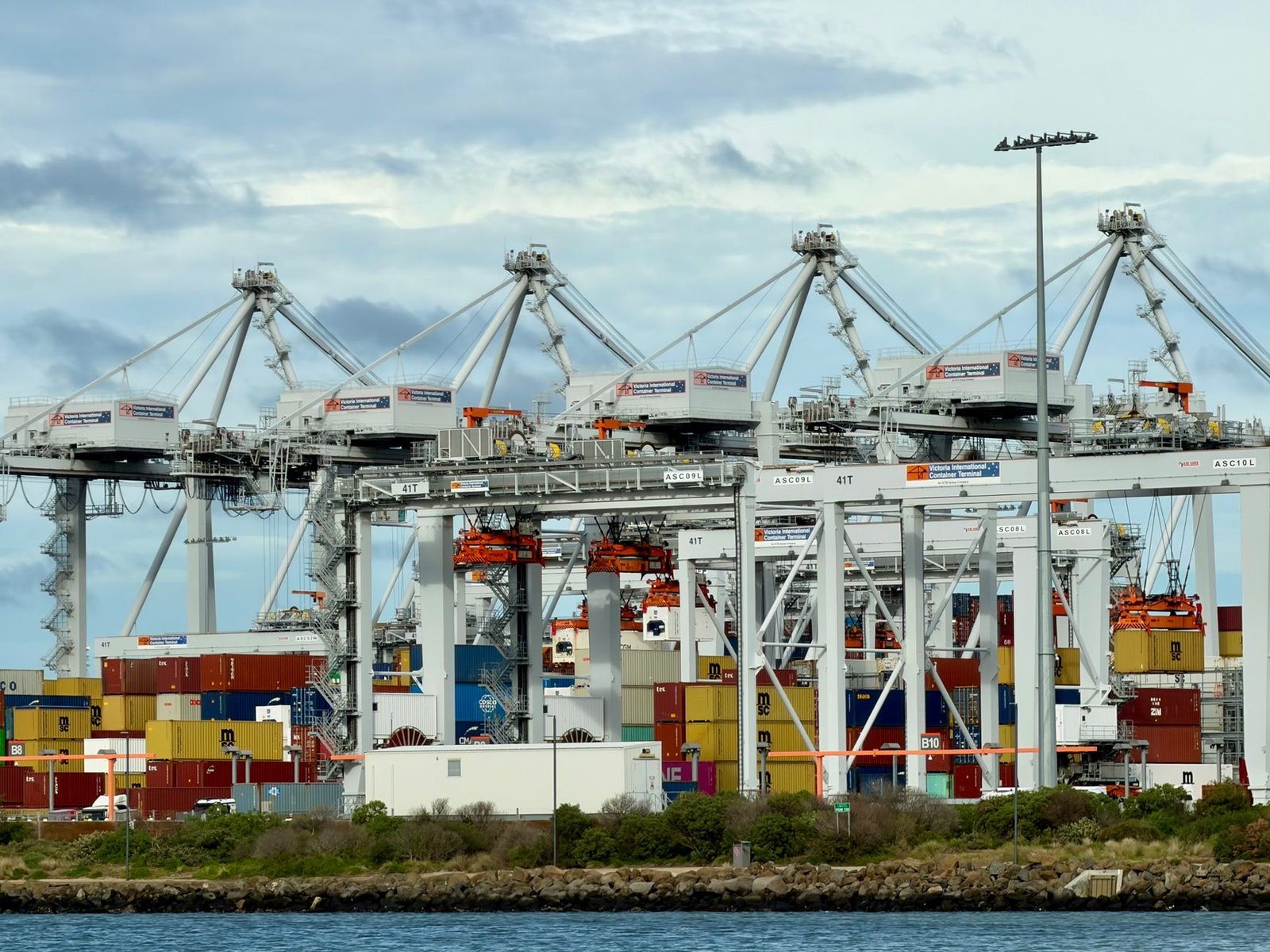
Step out of the mine and the pattern repeats wherever a vehicle works a fixed beat and sleeps at a yard. Port drayage — the short hauls that move containers between the terminal and nearby warehouses — is a near-ideal case: the ICCT’s real-world study of the Seattle–Tacoma region found near-dock trucks running tight loops of around 40 miles a day and returning to base, exactly the duty cycle a battery handles best. The cargo-handling equipment behind the fence — yard tractors, rubber-tyred gantry cranes — is easier still, because much of it never leaves a paved area wired to the grid.
Transit buses and delivery vans close the set. A bus route is the same road twice a day and a depot every night; a parcel round is planned to the street and returns to a hub to reload. In every one of these cases the vehicle solves, by the shape of its job, the two problems that make an electric car anxious: it always knows how far it will go, and it always knows where it will charge. It is also why the electric-truck league table looks so lopsided: China registered 231,100 electric heavy trucks in 2025 against Europe’s 4,991, largely because it went after the duty cycles that close on their own first.
So why did the car go first in the headlines?
Because policy pushed it there, not economics. The passenger car got the subsidies, the mandates and the marketing precisely because its numbers do not close on their own: a variable route makes the battery hard to size, street parking makes charging uncertain, and 447 gallons a year is too little fuel for the saving to swamp the price premium. Left to a spreadsheet, the car is the last vehicle you would electrify, not the first.
The working vehicles never needed the push. They electrify when the diesel bill and the duty cycle make the sum obvious, which is why the real signal for where oil demand falls is not the showroom. It is the pit, the port and the bus depot — the vehicles nobody writes about, quietly doing the arithmetic that a car cannot.
| Vehicle | Route | Overnight base | Annual fuel (GGE) | Electrifies on economics? |
|---|---|---|---|---|
| Class 8 / drayage truck | Fixed near-dock loops | Port or yard | 9,752 | Increasingly |
| Transit bus | Fixed route | Depot | 9,277 | Yes |
| Delivery van | Planned round | Hub | 1,642 | Yes |
| Passenger car | Variable | Street or home | 447 | Needs a subsidy |
The mine haul truck sits off the top of that table entirely, burning many times a Class 8 truck’s fuel on a loop a few kilometres long. It is the purest version of the same rule — and the reason the heaviest, dirtiest machines are going electric while the debate stays fixated on the car.
Photo by Gansham Ramchandani on Pexels · Photo by Deyler Rivera Segura on Pexels · Photo by Joolsmagools ®️ on Pexels