
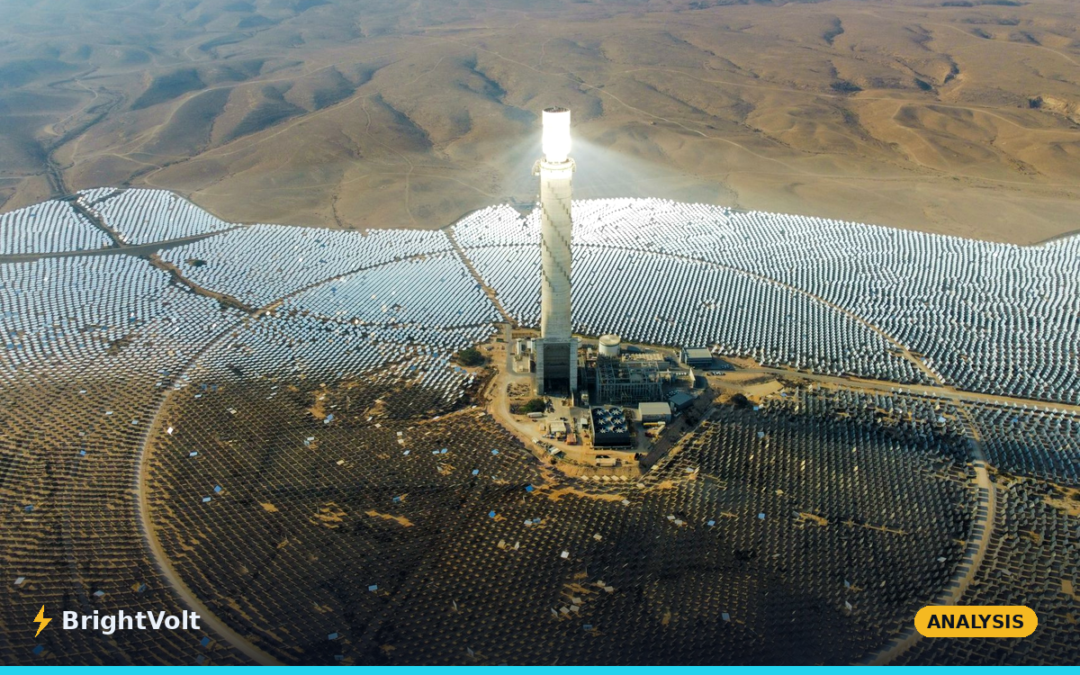
On October 1, China connected a solar plant that keeps generating after the sun goes down. The 1 GW project at Talatan, in Qinghai, pairs 900 MW of ordinary photovoltaics with a 100 MW tower that stores eight hours of heat in molten salt, and PowerChina expects it to produce about 2.2 TWh a year. The interesting part is not the gigawatt. It is that the storage is made of salt, not lithium.
That choice runs directly against the way the rest of the world has decided to firm up solar power. The West tried concentrated solar a decade ago, decided it was too expensive, and moved on to batteries. China kept building — and this plant is the clearest statement yet of why.
What actually switched on at Talatan
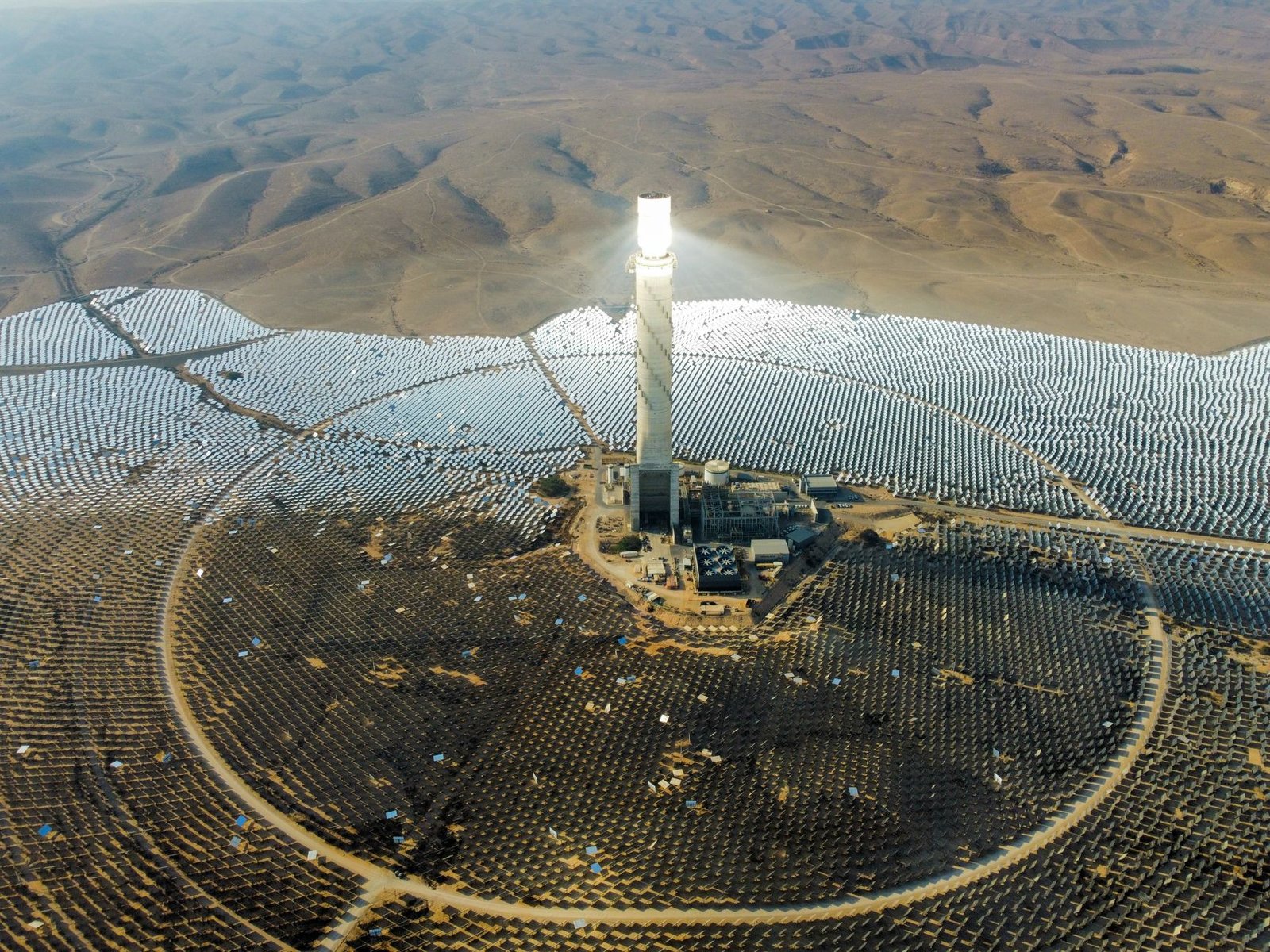
The project sits at about 2,870 metres on the Qinghai plateau, inside the Hainan solar park, and PowerChina’s Northwest Engineering arm built it. The headline capacity breaks into two very different machines. The bulk is a conventional 900 MW photovoltaic array — roughly 1.9 million panels, around 1.25 GW once you count the DC side. Bolted to it is a single 100 MW concentrating solar tower: 10,310 pentagonal mirrors tracking the sun onto a receiver 219 metres up, heating molten salt that drives a steam turbine.
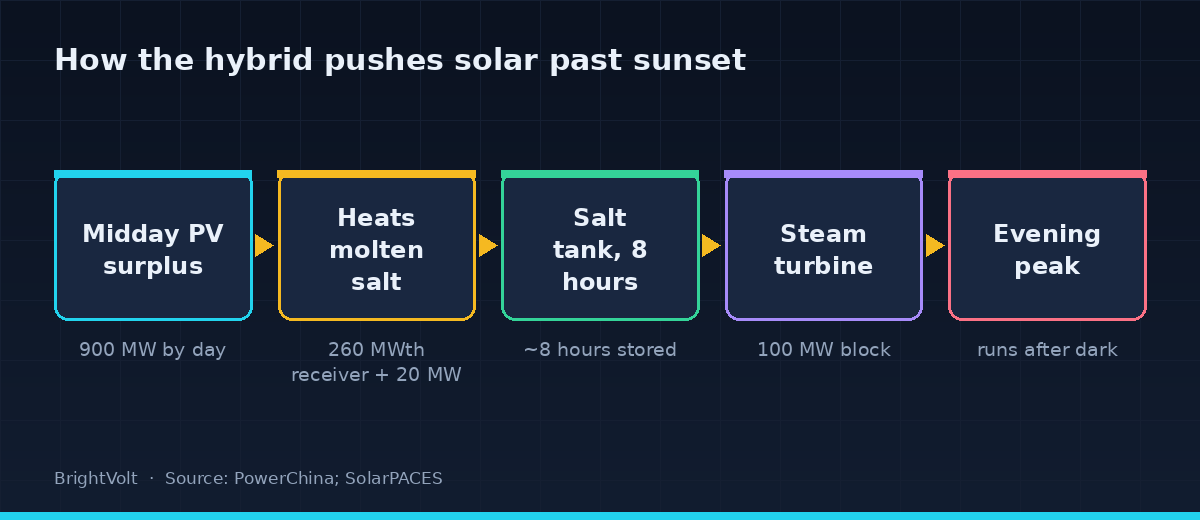
The two halves do not simply sit on the same patch of desert. Surplus daytime output from the PV array can be pushed through a 20 MW electric heater into the salt, on top of the heat the 260 MW-thermal receiver gathers directly. Come evening, the stored heat spins the turbine. The PV does the cheap daytime bulk generation; the tower and its salt tank exist to carry a slice of that energy across sunset and into the evening demand peak, when solar normally falls off a cliff and the midday glut it produced is worth least.
Why the concentrating part is only a tenth of it
Read the split again, because it is the whole argument: 900 MW of PV, 100 MW of tower. The concentrating solar is a tenth of the nameplate.
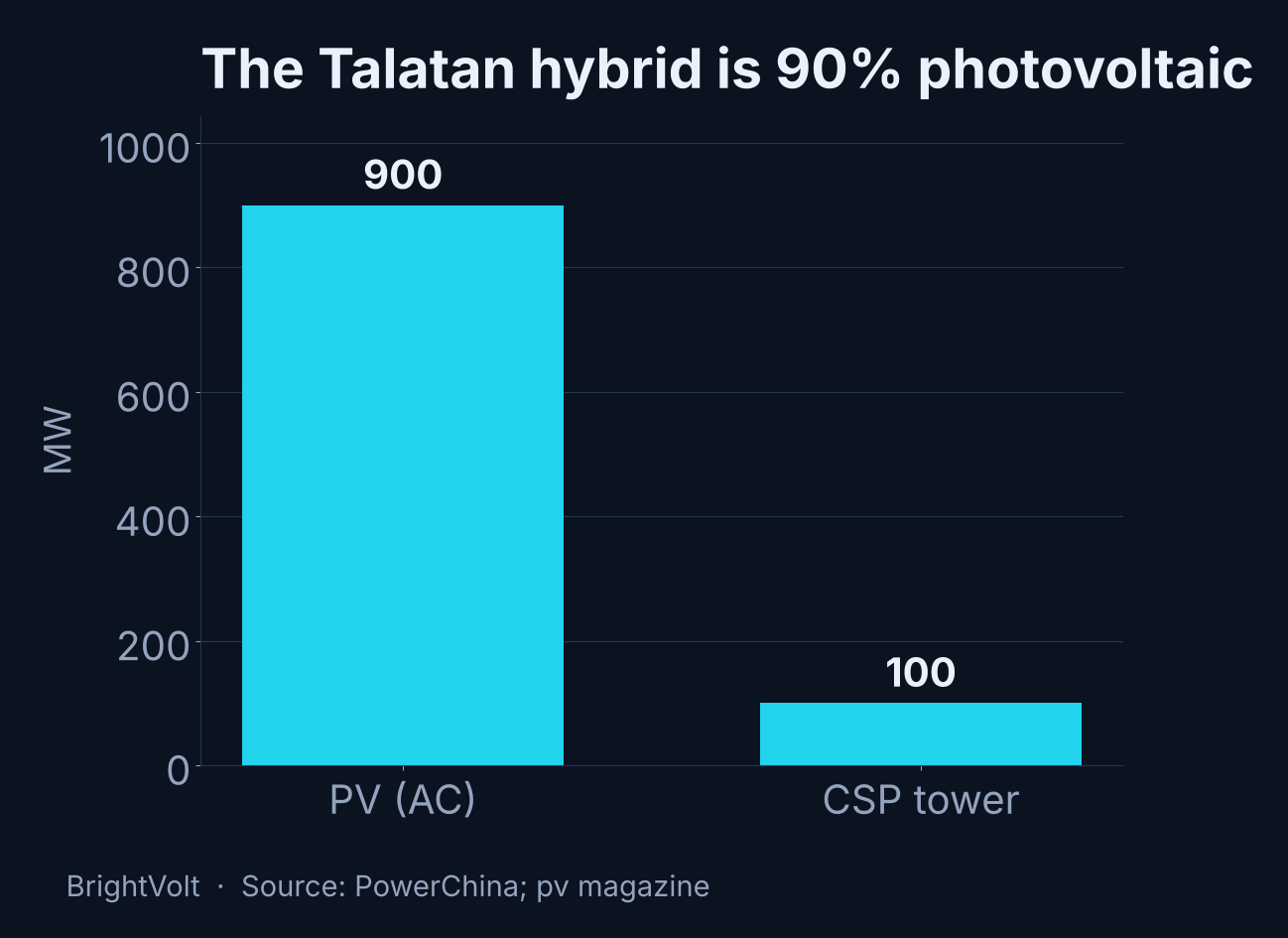
This is the lesson the first generation of solar-thermal plants missed. Building mirrors and a tower to generate electricity directly is a bad deal — photovoltaics got absurdly cheap while heliostat fields did not, and a panel converting sunlight to electrons will beat a mirror boiling salt to spin a turbine on cost every time. So the tower here is not really a generator. It is a storage device that happens to come with a turbine attached. The job of the 100 MW block is to time-shift, not to out-produce the panels, and sizing it at a tenth of the array is a tacit admission that cheap silicon won the generation fight years ago.
What the tower brings is the one thing a panel cannot: a store of energy that is dirt cheap to make large.
The storage trick the West wrote off
Molten salt stores energy as heat, and heat in a big insulated tank is remarkably cheap to hold. The salt itself runs on the order of €15–70 per kilowatt-hour of thermal capacity, against the far higher per-kilowatt-hour cost of lithium cells, and it holds its charge at 90–99% efficiency with a loss of only a few percent a day. A tank rated for eight hours costs a fraction of what eight hours of battery would. That is the number that makes CSP interesting again, and it is why nearly every long-duration-storage conversation eventually circles back to stores that are not batteries.
The catch is on the way out. A battery returns something like 85–90% of the electricity you put in. A thermal plant has to turn its stored heat back into power through a steam turbine, and that conversion is lossy — a CSP block delivers only around 40% of its heat as electricity. So the cheap thermal kilowatt-hour is not a cheap electrical one. The often-quoted line that molten salt is “33 times cheaper than lithium” compares the cost of storing a kilowatt-hour of heat against a kilowatt-hour of electricity, which are not the same good and never were.
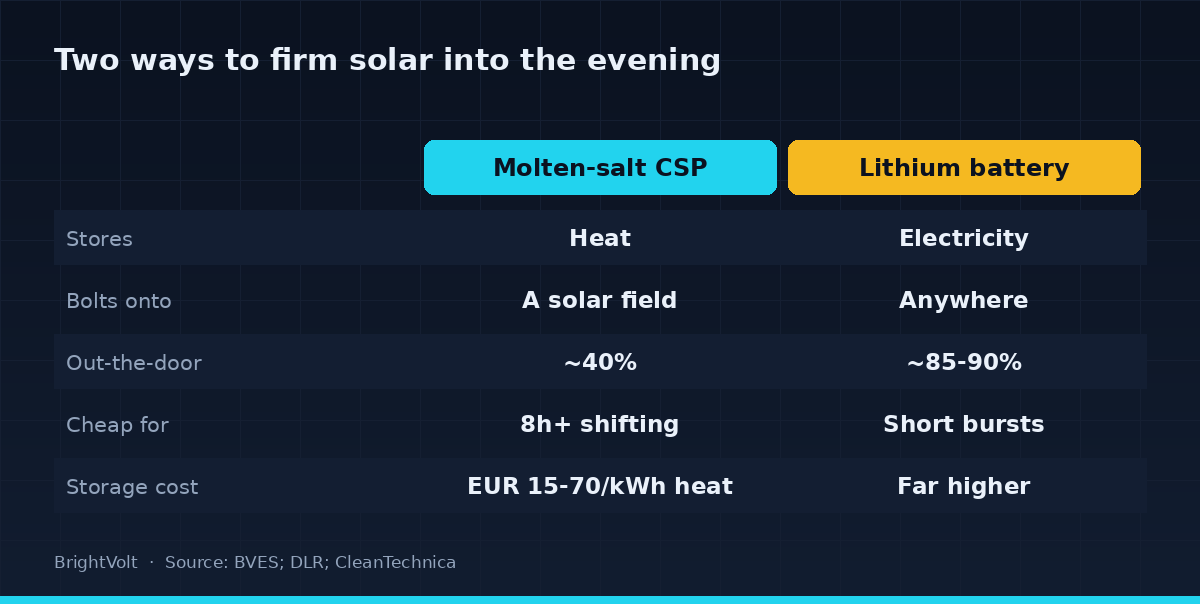
That trade — cheap to fill, lossy to empty — is exactly why the technology only makes sense welded to a solar field that is producing surplus heat anyway, and why it collapses as a standalone grid battery. Get it wrong and you get Ivanpah: the 392 MW Californian plant that opened in 2014 for $2.2 billion on a federal loan guarantee, generated electricity directly with no molten-salt storage at all, burned natural gas every morning to get started, and is now closing years early after its utility walked away from the contracts. A tower with no cheap store behind it is just an expensive, bird-scorching way to make steam.
| Ivanpah (2014) | Talatan (2026) | |
|---|---|---|
| What the tower does | Generate electricity directly | Charge a heat store |
| Molten-salt storage | None | Eight hours |
| Paired with cheap PV | No | 900 MW alongside |
| Morning start | Burned natural gas | Stored heat |
| Status | Two of three units closing early | Just grid-connected |
China drew the opposite conclusion from the same decade. Its regulators never allowed a CSP plant to be built without storage — the mistake Ivanpah embodied — and then stopped asking the tower to compete on generation at all, pairing it with the cheapest panels on earth.
What “15 GW by 2030” is really worth
China now has about 2.1 GW of concentrating solar in operation, which already puts it within reach of Spain’s 2.3 GW and ahead of the 1.5 GW the United States built through 2015. Globally the technology is still tiny: roughly 7 GW of CSP against more than 1,000 GW of PV.
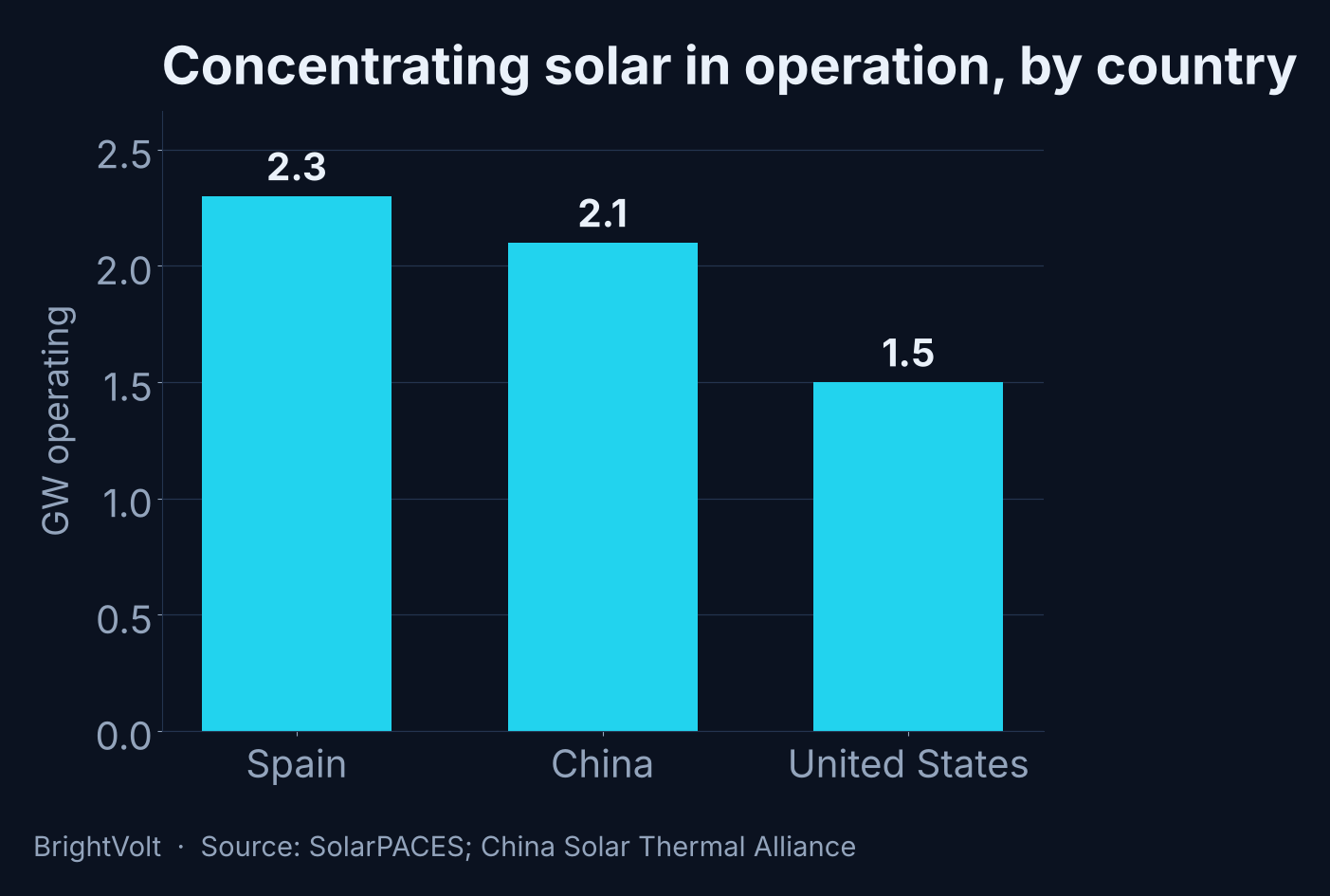
The figure doing the rounds is 15 GW of CSP by 2030, from the 15th Five-Year Plan. It is worth reading the actual words. The text says China should “strive to reach” 15 GW — and as the analyst Kevin Tu has pointed out, that phrasing sits in a key-projects box rather than among the plan’s binding targets. It is an aspiration, not a quota. Getting from 2.1 to 15 GW in five years would need provincial mandates, transmission and a lot of money that has not yet been committed. Treat the number as a direction of travel, not a done deal.
But the direction is unambiguous, and Talatan is not a one-off. A second gigawatt-scale PV-CSP hybrid is under construction at Turpan in Xinjiang, and several more towers are out to bid. China is treating molten salt as a standard component of a solar build-out — the dispatchable layer that lets a province lean harder on panels without leaning on a battery for every evening hour.
What to watch
The claim here is narrow and falsifiable: molten-salt CSP is not making a comeback as a generator, it is making one as the cheapest way to shift eight-plus hours of solar into the evening in places with the land, the sun and a solar field already feeding it. If that read is right, the tower stays a tenth of the plant and the PV keeps growing underneath it.
What would overturn it is a single number moving: the cost of long-duration lithium or iron-air storage falling far enough that nobody bothers bolting a steam turbine to a solar farm to firm it. Watch whether the next wave of Chinese hybrids keeps the 9-to-1 ratio, or quietly shrinks the tower further. The day the molten salt disappears from the spec sheet is the day the batteries finally won this argument too.
Photo by Lio Voo on Pexels · Photo by Lio Voo on Pexels