
Battery Technology
Battery announcements are graded on a curve that rewards the boldest claim. BrightVolt reads them the other way round: what chemistry, at what C-rate, at what cost, at what technology-readiness level, and shipping when. That last distinction matters more than any other — a trial production line and a car you can buy are different events, and most coverage collapses them into one.
We cover lithium-ion and its successors, including LFP, sodium-ion and solid-state, along with the degradation mechanisms such as lithium plating that decide how long a pack actually lasts in the vehicle rather than in the laboratory.
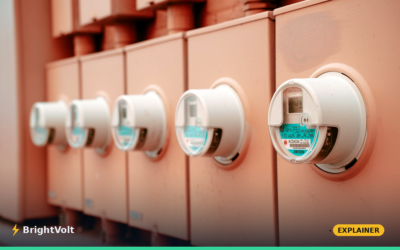
Demand Charges: Why One 15-Minute Peak Sets Your Bill
A demand charge is set by your single highest 15-minute peak, not your total usage – and it can be 30-70% of a commercial power bill. Here’s the math, the ratchet trap, and the fix.
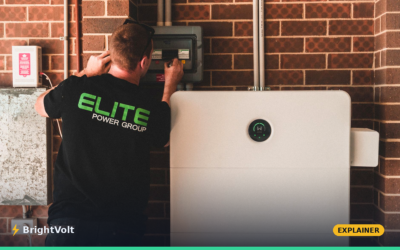
How 100-Hour Batteries Work: Iron-Air and Carbon-Oxygen
Iron-air and carbon-oxygen batteries store power for days and give back barely half of it. That inefficiency is the point: they cost a tenth of lithium per kWh, for a job lithium cannot do.
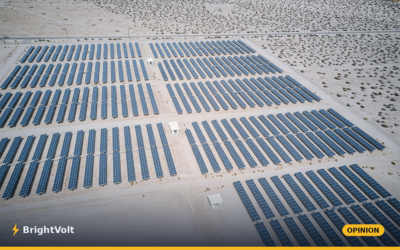
The BrightVolt Take: Solar and Wind Got More Expensive
For the first time in a decade, solar and wind got more expensive in 2025: BNEF has global solar up 6%, Lazard US solar up 18%. Only storage kept falling – and that changes what to build.
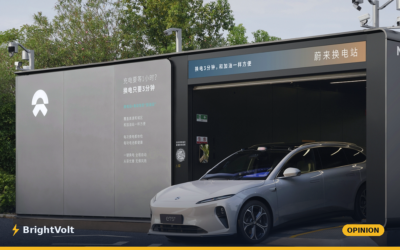
The BrightVolt Take: Geely’s Nio Deal Won’t Fix Car Swapping
Geely is buying 30% of Nio’s battery-swap arm at a $2.2bn valuation. It looks like the standardisation breakthrough swapping needed. It is two loss-makers consolidating to survive.
The BrightVolt Take: China’s EV Boom Is Outrunning Battery Validation
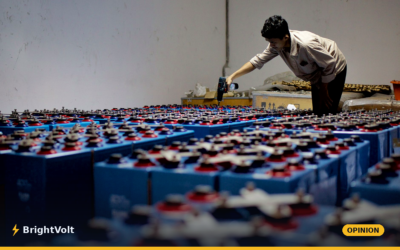
China launched 600+ new EV models in H1 2026, nearly four a day. CATL’s own chairman says the pace is causing battery ‘batch failures’ – and this year’s recalls back him up.
The BrightVolt Take: The VPP Dispatch That Beat Our Forecast
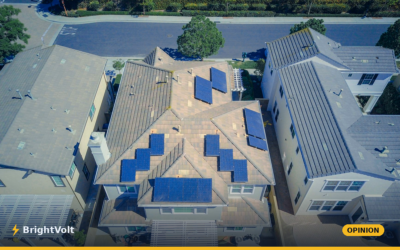
Sunrun and Tesla dispatched a record 580 MW from 140,000 home batteries. A month ago we pegged that fleet’s real output at 300 MW. We were too cautious – but 16.8 GW is still wrong.
The BrightVolt Take: Korea’s $6bn Battery Catch-Up
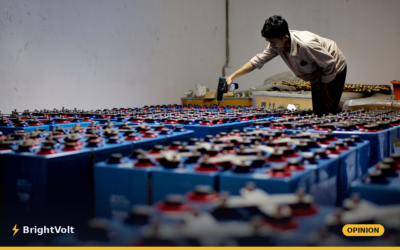
South Korea is spending $6bn to leap to sodium and solid-state batteries. But its 2027 sodium target already trails a Chinese cell shipping in 2026 — the bet is aimed at the past.
Denza Z9S: The World’s Longest EV Range, Decoded
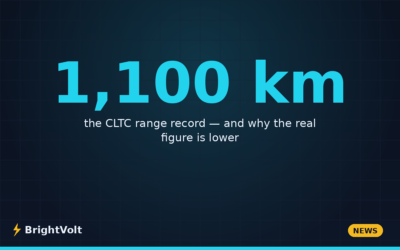
Denza’s Z9S claims the world’s longest EV range, 1,100 km. The record comes from a 20% bigger battery, not a more efficient car — and even the WLTP figure is a house conversion.
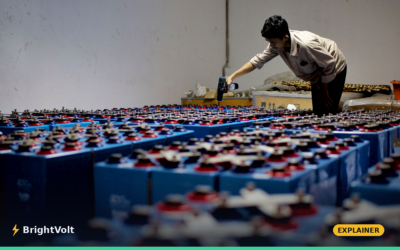
Captive vs Merchant Battery Makers, Explained
CATL makes 40% of the world’s EV batteries and builds no cars; BYD makes 14% and mostly uses its own. Why a cell maker’s customers, not its chemistry, set its ceiling.
BrightVolt
News / Reviews/ Insights on all things Electric and alternative enegry
Contact
info@brightvolt.net
Advertising
Advertsing: ads@brightvolt.net
Public Relations: pr@brightvolt.net
Copyright © 2025 BrightVolt ®