
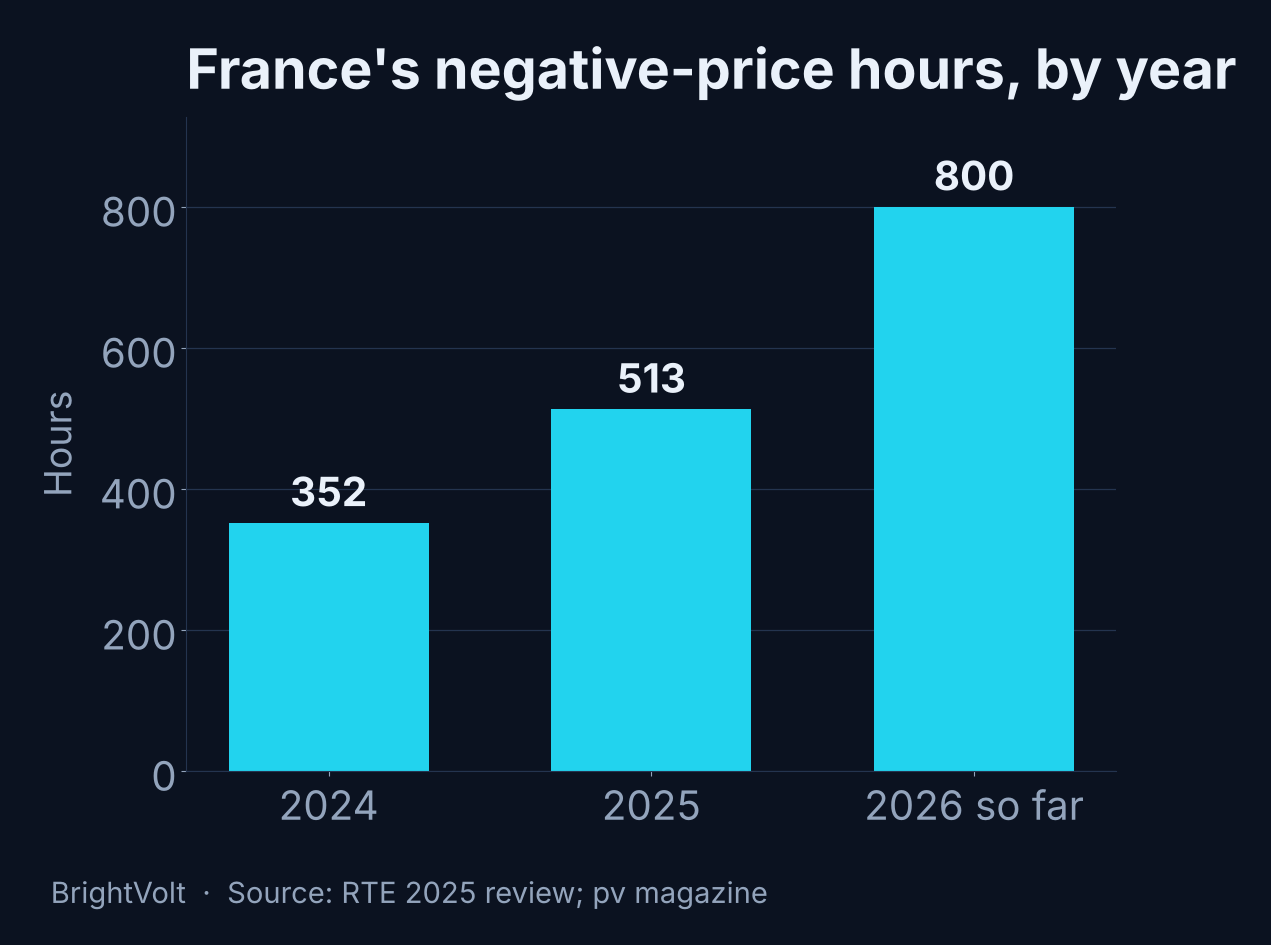
France has run up roughly 800 hours of negative or zero wholesale electricity prices in 2026, an all-time high — and already more than the whole of 2025 with a quarter of the year still to run. The government’s answer, fleshed out this month, is the right one. Stop treating the midday glut as a surplus to spill or store, and start moving demand into it.
That is a more interesting choice than it sounds, because it is the opposite of the reflex. The reflex is to build batteries and firm the renewables down. France is proposing to leave the solar where it is and teach the country to use power when the sun is up.
Why France keeps paying people to take its power
The surplus is structural, not a run of odd afternoons. France’s transmission operator RTE logged 352 hours of negative spot prices in 2024 and 513 in 2025 — about 6% of the entire year — and 2026 has already blown past both. On 1 May the day-ahead price hit −€498/MWh, close to the regulatory floor, as holiday demand collapsed into a wall of solar.
The cause is simple arithmetic. France added 2.9 GW of solar in the first half of the year to reach about 34 GW installed, and it did not add any midday demand to match. RTE’s own description is the one worth keeping: “the mid-day plateau has become a trough.” In spring and summer the wholesale price is now routinely lower between 8am and 8pm than its own daily average. The country has built a mountain of cheap power and a timetable that mostly wants it somewhere else.
This is the same force that is hollowing out the capture rate of every solar plant in Europe: the more of it runs at once, the less each kilowatt-hour earns, because they are all selling into the same depressed hour. The usual fixes are to curtail the output or to store it. France’s package is a bet that there is a cheaper third option sitting in the country’s boilers and driveways.
What France actually announced
Government spokesperson Maud Bregeon set out a second tranche of measures this month, after an initial package in April, aimed squarely at shifting consumption into the high-solar hours. The headline grid item — letting solar-plus-storage projects up to 25 MW connect under the old 17 MW rules, provided they never inject more than 17 MW — is the least of it. The substance is on the demand side, and the lever is a mandate dressed as a subsidy condition.
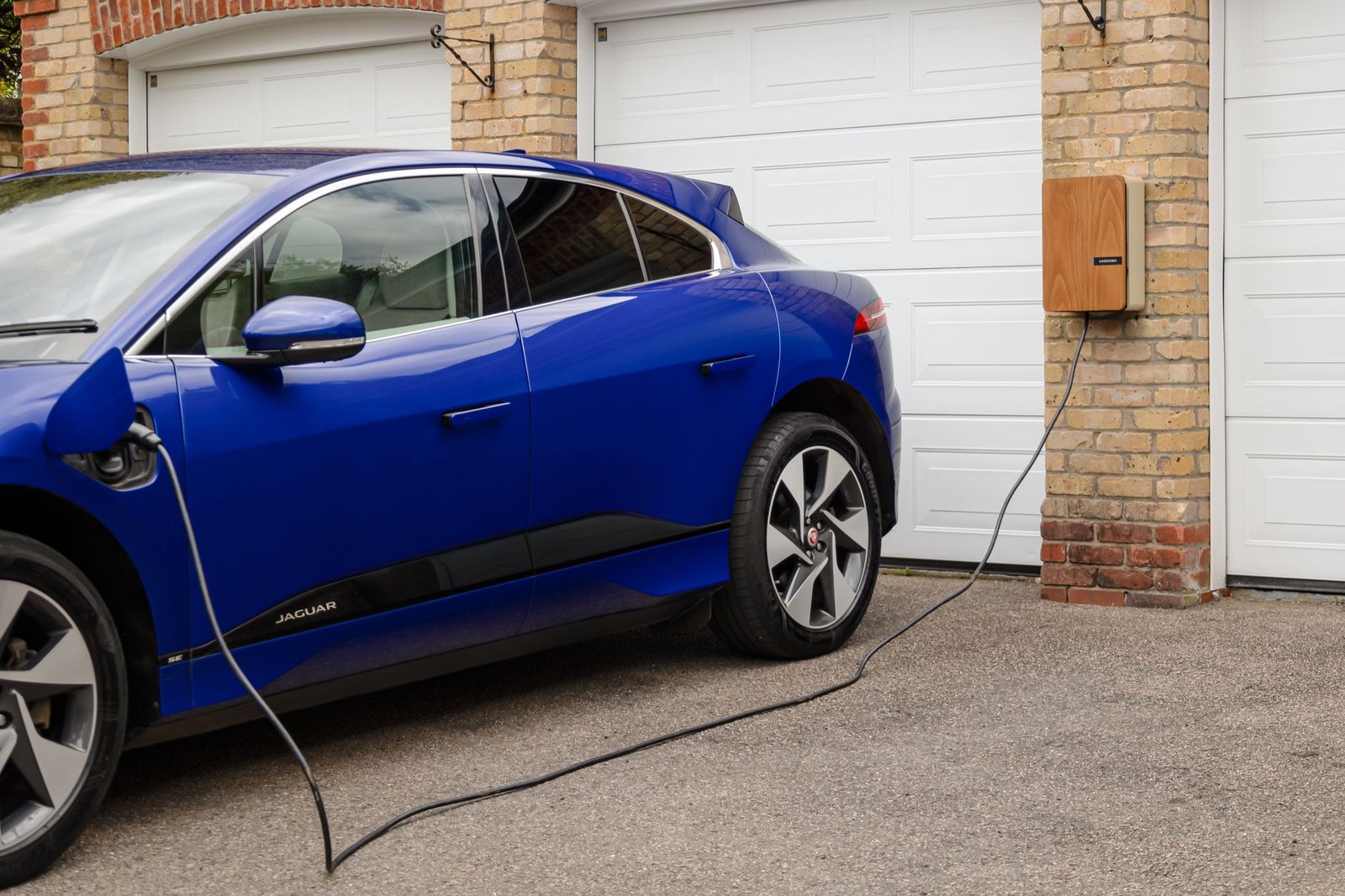
From 2027, France’s heat-pump grants will be conditional on the unit having smart-control capability, so the state stops paying for appliances that cannot be told when to run. Smart scheduling is to be the default in new EV chargers, hung off the Linky smart-meter network or an off-peak timer. EDF’s buyback arm is testing tariffs that track the solar curve, cheapest at noon. RTE reckons smart management of heating, hot water and car charging could cut a household’s associated costs by up to 35%.
The part that makes it real is the flexibility the energy industry has committed to deliver by 2030.
| Provider | Flexibility committed by 2030 |
|---|---|
| Octopus Energy France | 1.5m connected devices, ~5–6 GW; 15,000 controllable heat pumps |
| Gimelec (industry body) | 6 GW in commercial and service buildings |
| NW Group | €1bn to add 1.5 GW to its flexibility platform |
| EDF | Remote control of equipment in 5m households |
| Neoen | 1 GW |
Add Octopus, Gimelec, NW Group and Neoen alone and the stated ambition is on the order of 13 GW of steerable load — in a country whose summer midday surplus runs to several gigawatts. The numbers are commitments, not meters, and should be read as such. But the direction is unambiguous.
Why demand-shifting beats more storage here
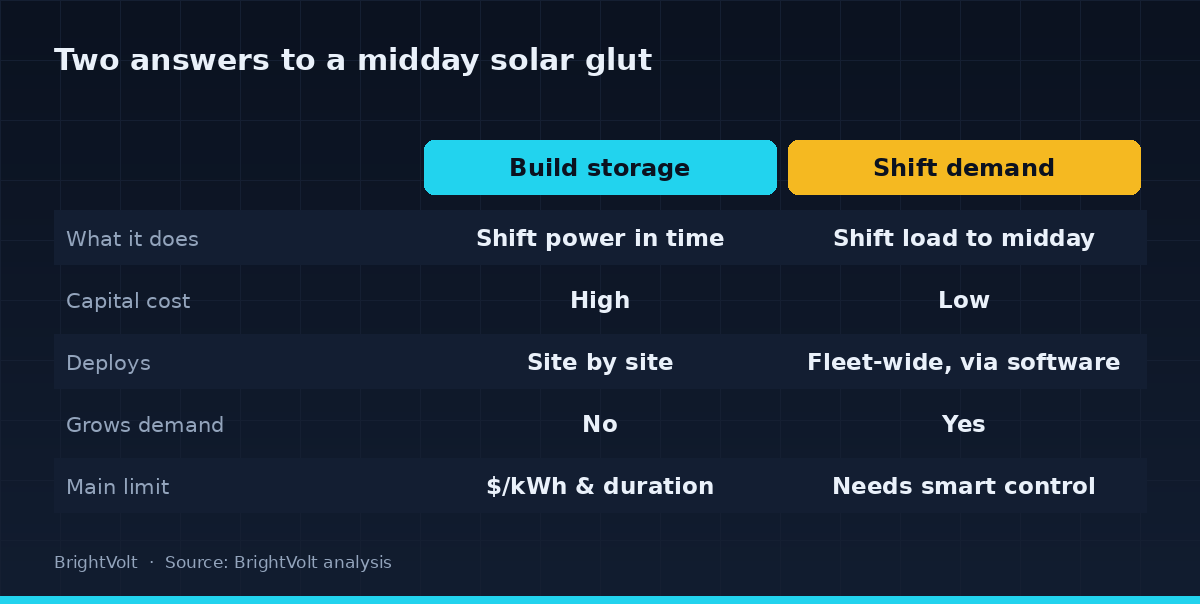
Storage moves a fixed amount of power from one hour to another. It does not create a reason to use more electricity at noon, and France’s problem is precisely a shortage of midday reasons. A battery charged on the −€498 hour still has to sell that energy back into an evening peak that must-run nuclear and gas already hold a floor under. The spread is real and batteries are earning on it — one analyst’s model battery saw its spot revenue rise 135% year on year — but arbitrage is a game played over a pie that demand-shifting can actually enlarge.
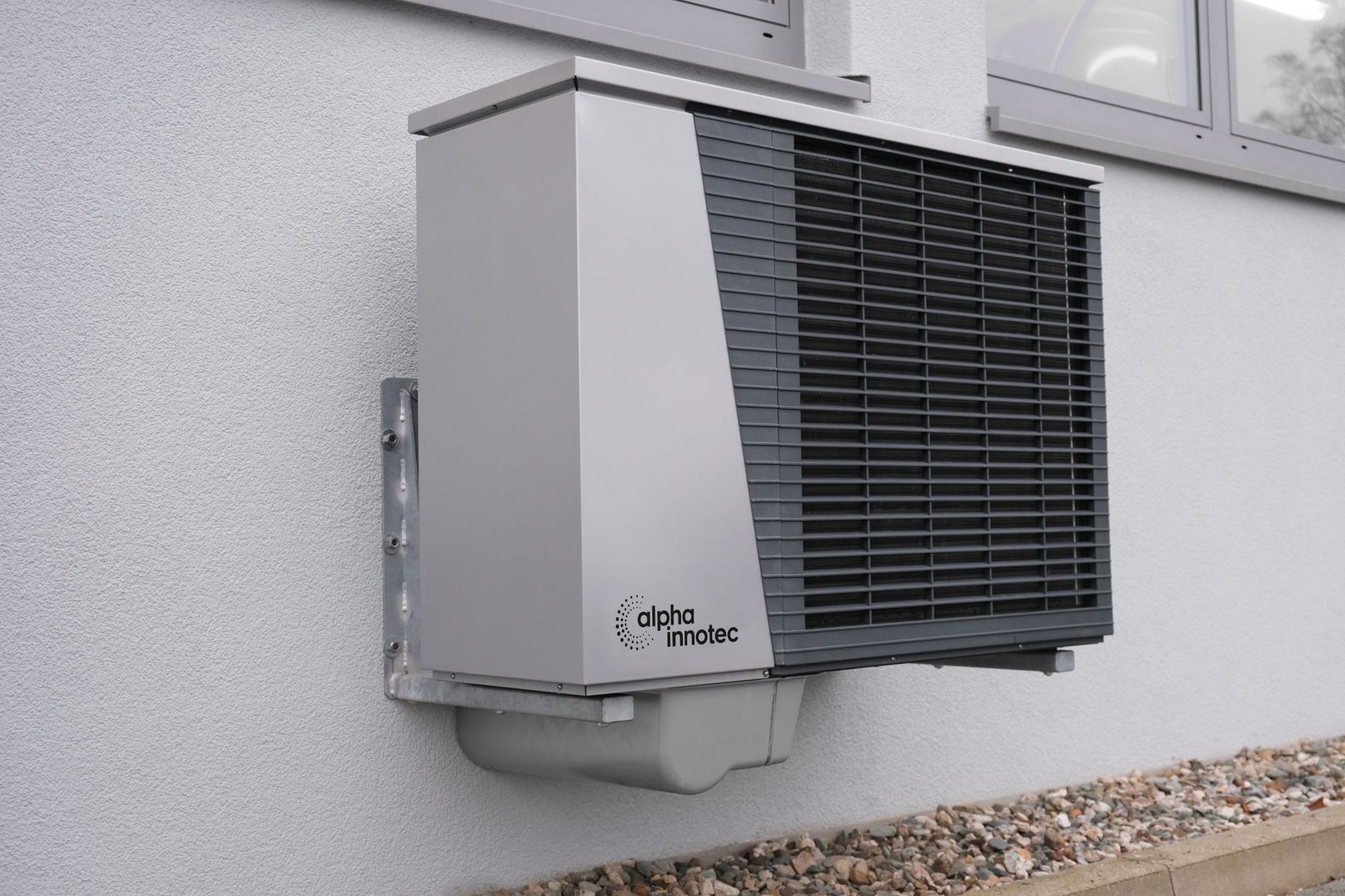
The deeper point is that France is electrifying heat and transport regardless. Every heat pump and every EV charger it installs this decade is a new flexible load by default — a thermal or chemical store that someone has already paid for. Making it schedulable is close to free; the compressor and the car battery are the storage, and the only addition is the instruction to run at midday rather than at 7pm. Left to the market, most of that kit will ship on legacy timers and the opportunity evaporates. The mandate is what captures it.
That is the case for leading with demand rather than steel. It is not a case against batteries — France will need those too — but against reaching for them first when a cheaper tool is being bolted to the wall anyway.
The export escape hatch is closing
The strongest objection is that France does not have to do any of this, because it can sell the surplus abroad. That is what happened in 2025: analysts at Montel found that France’s early-season negative-price record stopped climbing not because of storage but because of exports, as interconnector capacity returned and Germany and Belgium flipped to taking French power, letting France push out more than 10 GW an hour. Solar drove the problem; cross-border flows masked it.
The trouble is that the escape hatch only works when the neighbours are short while France is long. They increasingly are not. The same midday sun floods Germany, Spain and the Low Countries at the same moment, which is why Europe-wide negative prices surged together through the summer. An interconnector is worth nothing when the market on the other end is also paying people to stop generating. As European solar scales, the hours France most needs to export are exactly the hours no one will buy. Exports buy time. They do not solve the arithmetic, and France is right not to bet the decade on them.
What would prove this wrong
Watch one number: France’s negative-and-zero-price hours in 2027. If the demand-side push is working, the count should flatten or fall even as solar keeps climbing toward 40 GW, because the new load is soaking up the noon trough. If it keeps rising, the commitments are not reaching the meter.
Two failure modes would do that. The flexibility pledges could deliver far below their nameplate when actually dispatched — the perennial gap between a fleet of connected devices and the firm, steerable capacity it represents on the day it is needed. Or the 2027 smart-control conditions could be quietly watered down under pressure from installers and buyers who do not want another box to tick. Either turns a genuine market-design shift into a press release. But the instrument is sound, and it is the first serious attempt by a large grid to treat a solar glut as a demand problem rather than a generation one. The sun is not the thing that needs fixing. The timetable is.
Photo by Kindel Media on Pexels · Photo by alpha innotec on Pexels · Photo by Andersen EV on Pexels