
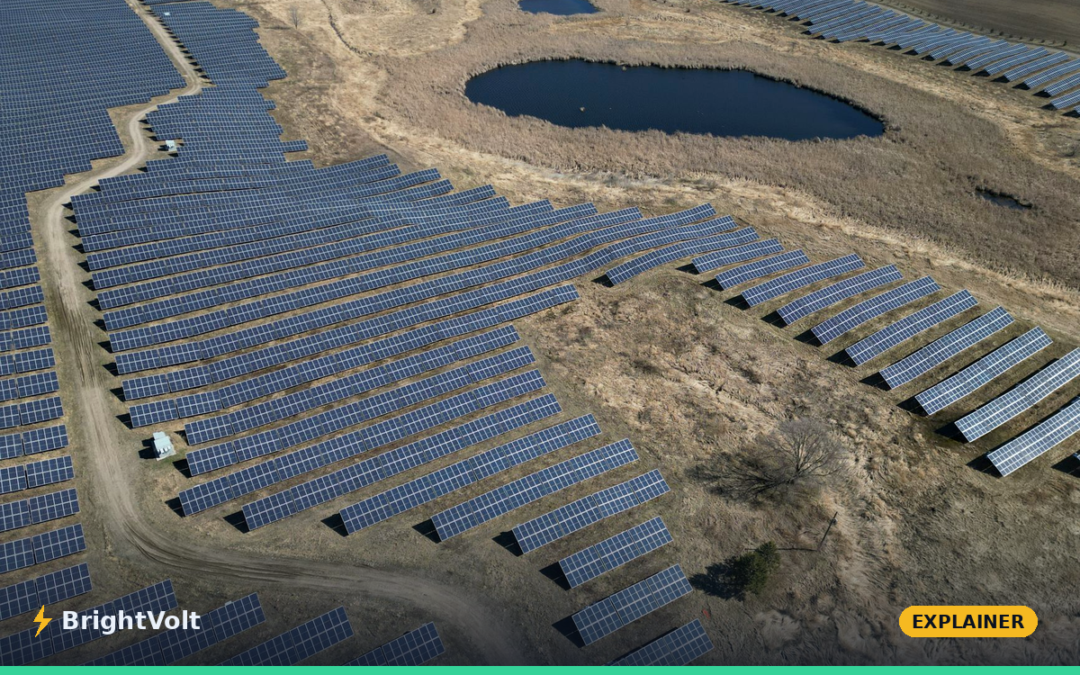
A coal plant cannot switch off when the sun comes out. Below roughly a third of its rated output the boiler runs too cool to burn cleanly and the turbine starts to complain, so the plant holds a floor of generation through the brightest, lowest-demand hours of the day. On a grid awash with midday solar, that floor — not a shortage of wires — is often the reason the clean power is what gets switched off first. The name for it is must-run generation.
It is the concept sitting underneath almost every curtailment story and every stretch of negative power prices, and it is rarely explained plainly, because the only places that spell it out are grid-operator manuals and engineering papers. Here is what it is and why it decides which electrons get spilled.
What “must-run” actually means
A thermal power plant is not a light switch. It has a minimum stable load — a level below which it cannot run steadily — and for a large coal or gas unit that floor is a large fraction of its full output, not a trickle. A boiler designed to raise steam at full tilt loses flame stability and starts to foul and fatigue its own metal if throttled too far. So instead of switching off for a few hours and back on, the plant stays on, idling at its floor, because the alternative is worse.
The alternative is worse for three reasons, and all three are physical. Turning a big thermal unit off and on again takes hours, not minutes — a cold coal plant needs anywhere from two to ten hours to come back. It burns fuel and wears components every time it cycles, so each stop-start has a cash cost measured in tens of thousands of dollars. And once off, it cannot respond if the wind drops or a cloud bank rolls in. Faced with a three-hour solar peak, an operator keeps the plant idling at its minimum rather than gambling on a restart. That idling floor is must-run generation: power the grid did not ask for, from a plant that cannot cheaply get out of the way.
The floor, by fuel
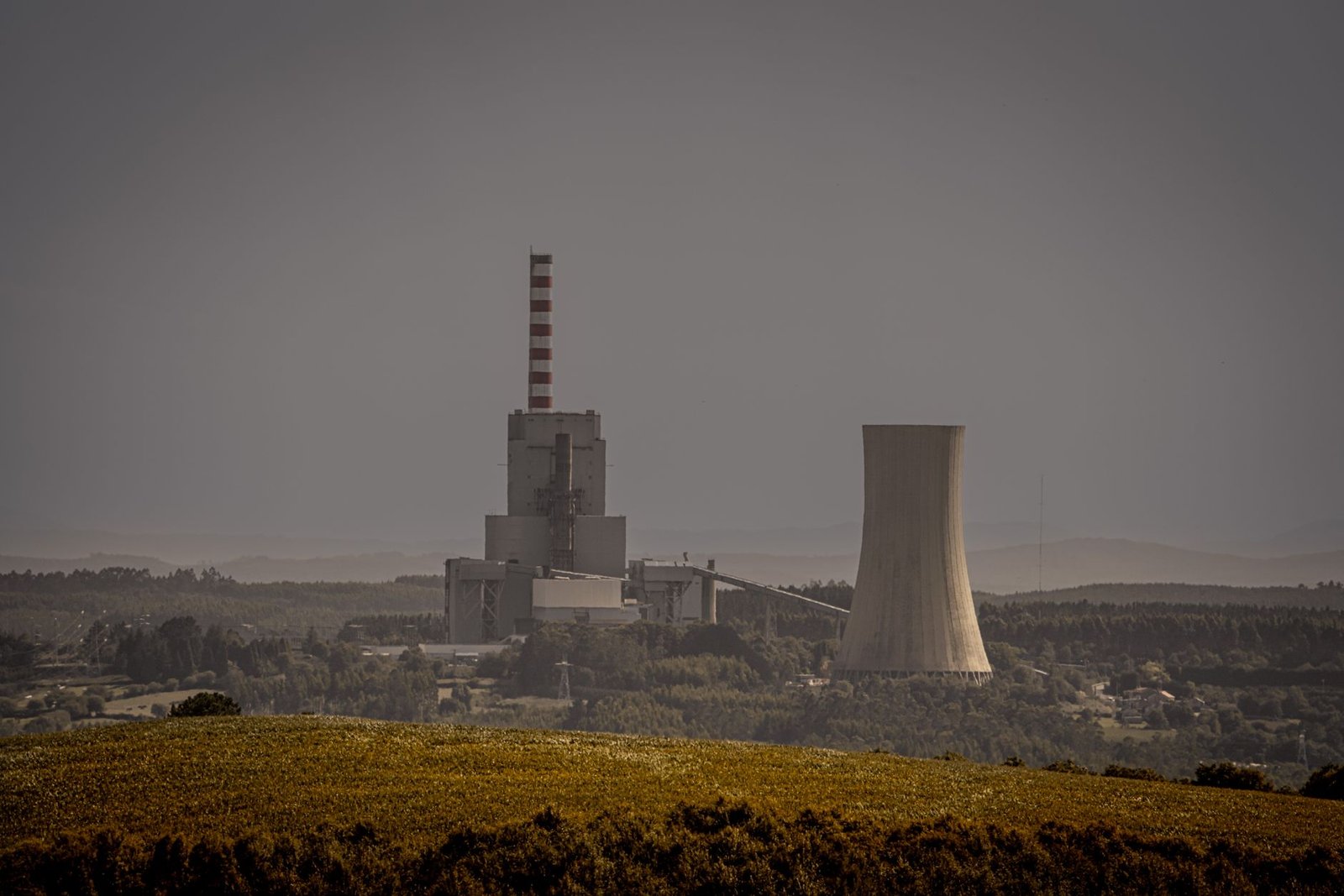
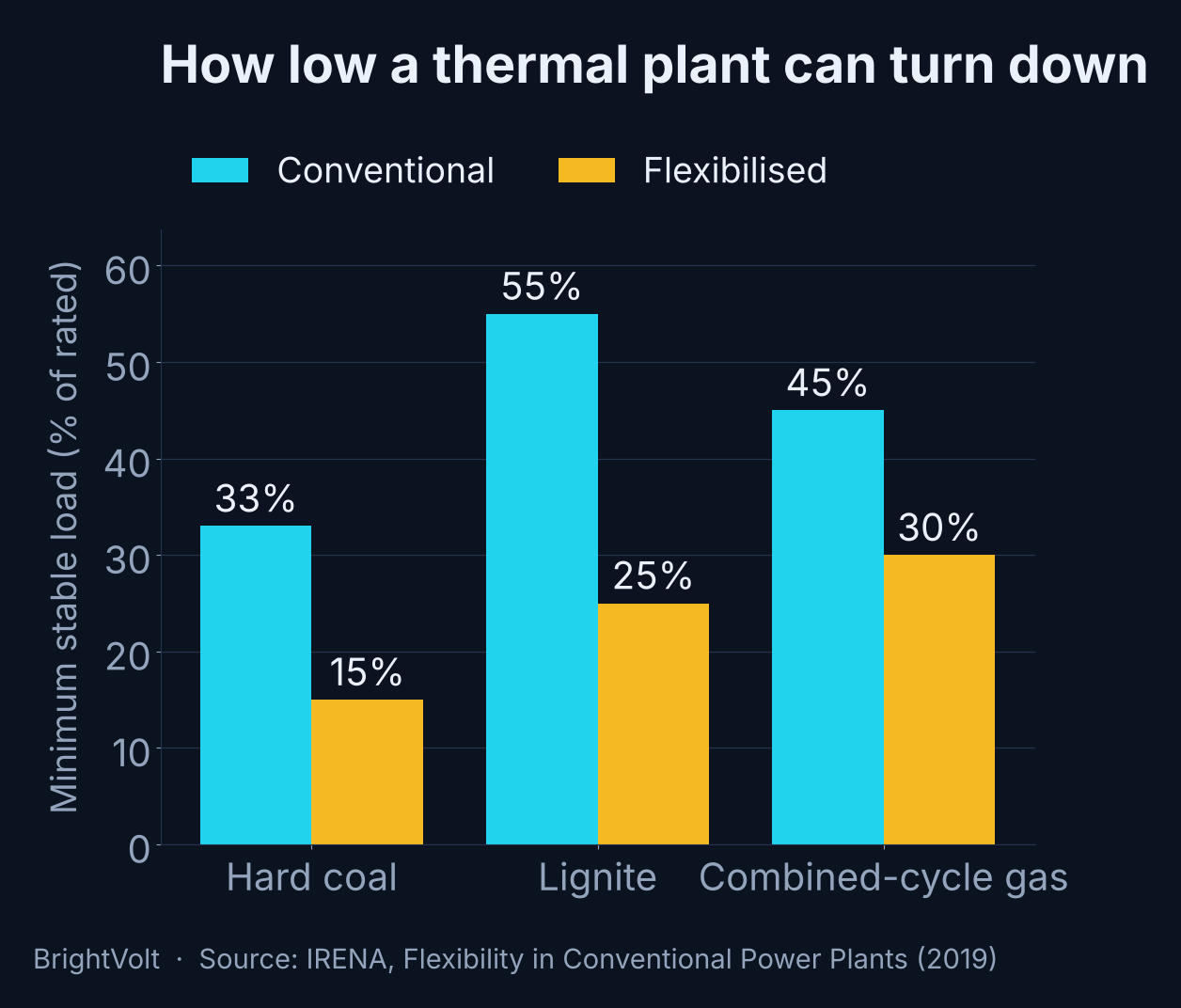
How high the floor sits depends on what the plant burns and how old it is. The International Renewable Energy Agency’s survey of conventional-plant flexibility puts a typical hard-coal unit’s minimum at 25–40% of rated output, lignite higher at 50–60%, and a combined-cycle gas plant at 40–50%. Retrofits can pull those floors down sharply — a flexibilised coal unit can reach 10–20% — but that is capital spent specifically to run less, and most of the installed fleet has not spent it.
The floor is only half the inflexibility. The other half is speed: even when a plant is allowed to move, it moves slowly. Coal ramps at a couple of percent of its capacity per minute; a combined-cycle plant a little faster. Nuclear is the extreme case — it is built to run flat out and flat, and most fleets never cycle it at all, which makes it a floor that never moves. Only the open-cycle gas turbine, the one plant designed to start cold in minutes, escapes the problem, and it pays for that nimbleness with terrible fuel economy.
| Plant type | Ramp rate | Cold start |
|---|---|---|
| Hard coal | 1.5–4% / min | 2–10 hours |
| Lignite | 1–2% / min | 4–10 hours |
| Combined-cycle gas | 2–4% / min | 1–4 hours |
| Open-cycle gas | 8–12% / min | 5–11 minutes |
| Nuclear | very limited | days |
A grid built on these machines was built to follow demand gently. It was never built for a supply source that goes from nothing to half the grid’s needs and back in the span of a sunrise and a sunset.
Why the floor spills solar, not coal
Here is the mechanism that trips people up. On a sunny, mild afternoon, generation runs ahead of demand and something has to give. Logic says spill the most expensive power first — and solar, with no fuel cost at all, should be the last thing switched off. It is usually the first.
The reason is that the thermal fleet is already at its floor and cannot go lower without shutting down, and much of it is kept online deliberately for the evening. California’s grid operator holds gas plants running through the solar peak precisely so they are warm and ready for the steep ramp when the sun sets and demand climbs at once. That reserved, warmed-up gas is must-run by necessity. So when supply is long at noon, the only generator that can actually be told to stop — instantly, at no fuel saving lost — is the solar farm. It gets curtailed not because it is expensive but because it is the only thing in the stack that is both dispensable and fast.
The numbers bear this out. California curtailed 3.4 million megawatt-hours of wind and solar in 2024, up 29% on the year before, and solar was 93% of it — nearly all of it spilled in spring, when the sun is strong and demand is weak. The curtailment is the visible shadow of the invisible floor.
Two kinds of floor: physical and contractual
The California floor is physical and partly unavoidable: the plants genuinely cannot turn down further, and some genuinely are needed for the evening. That floor shrinks as batteries take over the evening ramp and as the gas fleet is retrofitted to run lower.
China’s floor is a different animal, and it is instructive precisely because it is not physical. Chinese coal generators hold contracts covering 60–70% of the previous year’s delivered electricity, plus a capacity payment simply to stay available. That is guaranteed offtake and a retainer — a floor written in a contract rather than imposed by a boiler. The result is the same mechanism at a national scale: in the first half of 2026 China spilled an estimated 360 terawatt-hours of wind and solar, more than its entire demand growth, while coal generation rose. The clean power was there and was wanted; the system ran coal anyway, because coal had the guarantee and the renewables did not.
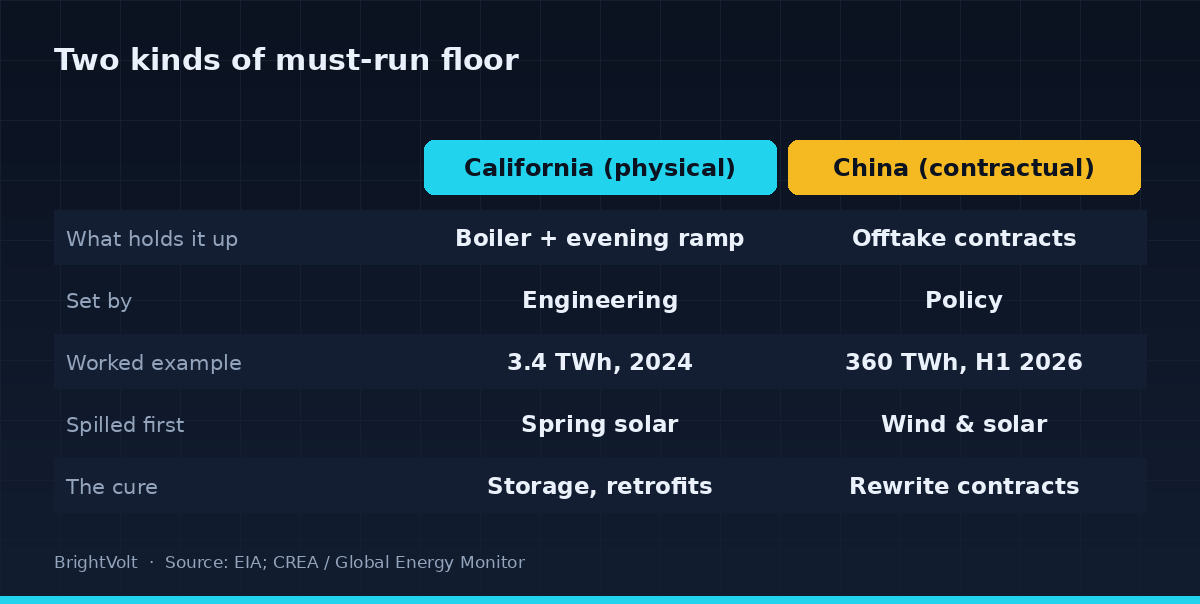
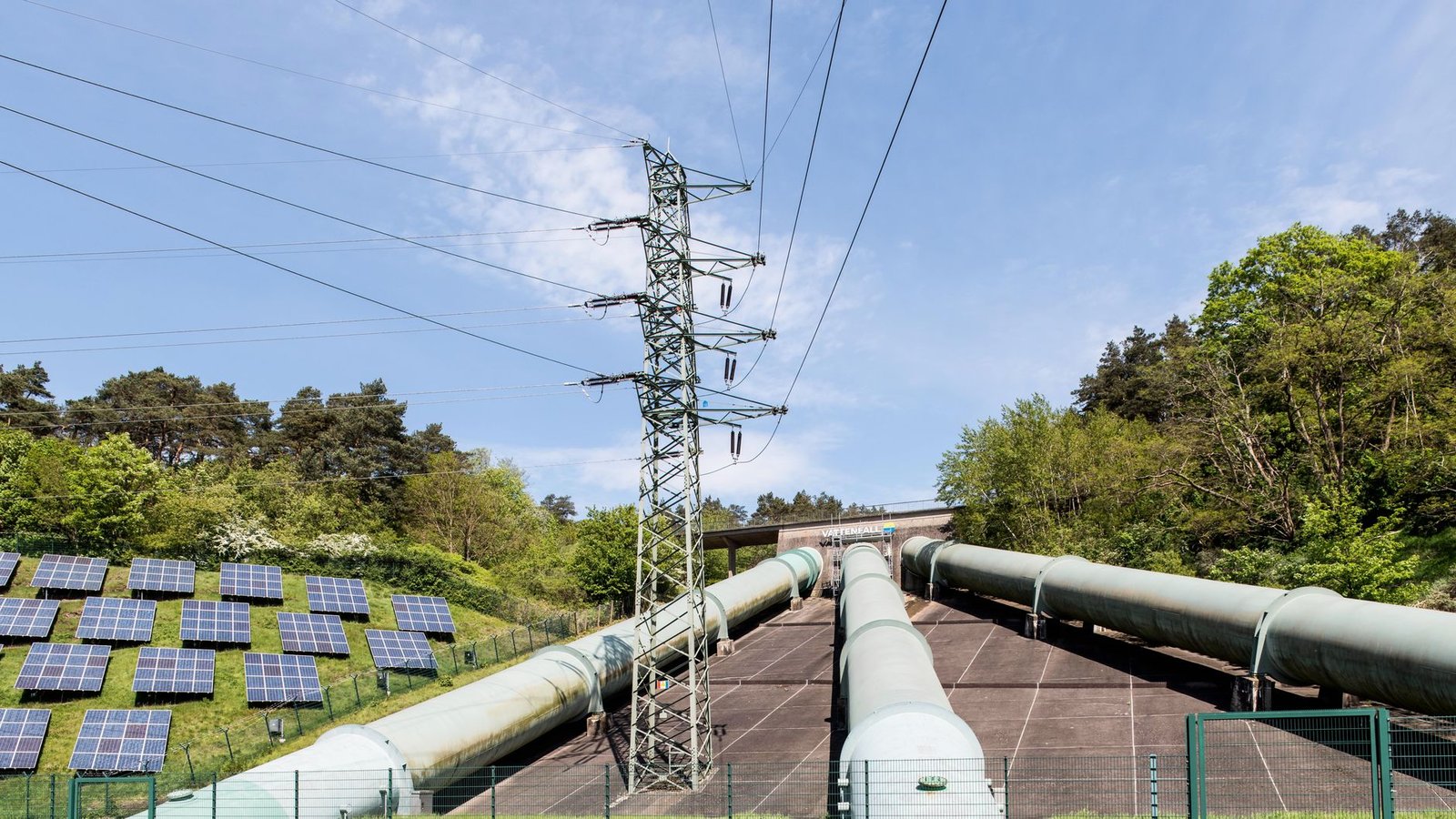
The distinction matters because the two floors have different cures. A physical floor is an engineering problem, and it yields to engineering: cheaper storage to carry the evening, flexibilised plants, grid-forming inverters that can supply the stability services the thermal fleet is currently kept online to provide. A contractual floor is a policy choice dressed as a technical constraint, and no amount of new hardware removes it until the contracts change.
What shrinks the floor
Must-run generation is not a villain. Some of it does real work — the spinning mass of a thermal plant lends the grid inertia and short-circuit strength that a simple solar inverter does not, and until batteries and grid-forming inverters take that job over, a slice of the fossil fleet earns its place even on a sunny afternoon. The question is how big that slice has to be, and the honest answer is: much smaller than it currently is.
Each of the three cures shaves the floor from a different side: storage carries the evening so gas need not idle through noon, retrofits turn a 40% floor into a 20% one, and inverters take over the stability job that kept the last units spinning. Together they let more free solar onto the wire instead of into the bin.
Watch the floor, not the headline curtailment number. A rising curtailment figure can mean the grid is failing or merely that it is building solar faster than it is shrinking the floor — and the two call for opposite responses. The question worth asking of any grid drowning in its own midday sunshine is not how much clean power it threw away, but how much of the floor underneath it was physics, and how much was a contract that could be rewritten tomorrow.
Photo by Giant Asparagus on Pexels · Photo by Tanhauser Vázquez R. on Pexels · Photo by Wolfgang Weiser on Pexels