
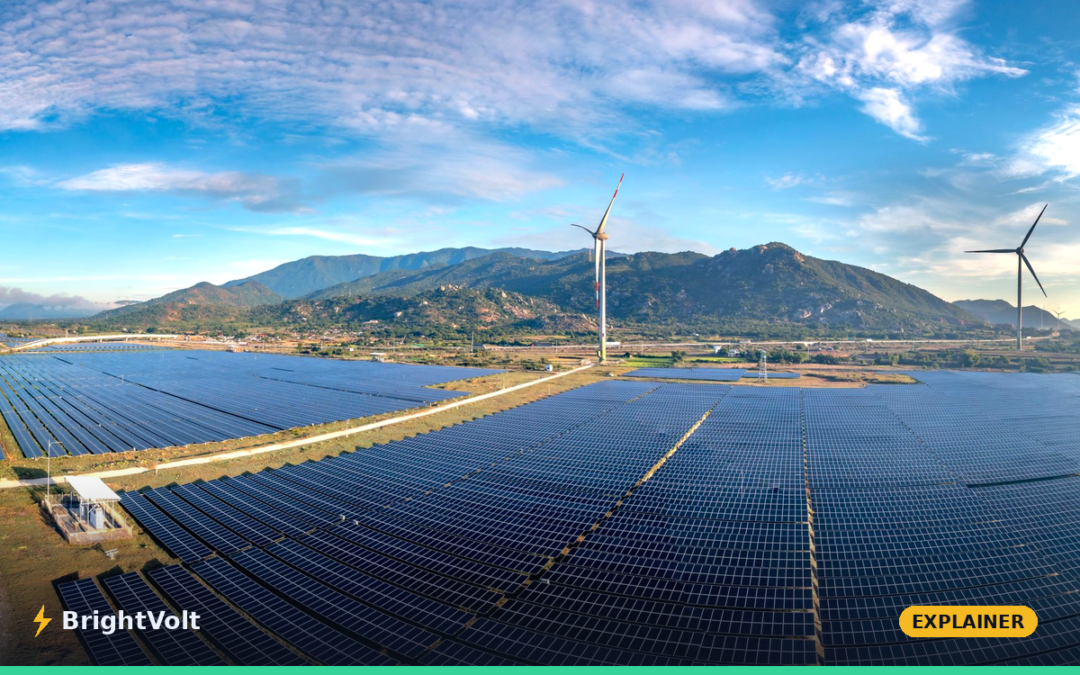
Curtailment is a power grid deliberately throwing away electricity it could have used — almost always wind or solar, almost always free at the point of generation. In the first half of 2026, China alone spilled an estimated 360 terawatt-hours of clean power, more than its entire electricity demand grew by. The obvious question is the right one: why would anyone build a solar farm and then switch it off?
The answer is that a grid is not a battery, and electricity is not a warehouse good. Supply has to match demand every second, and when there is more wind and sun than the system can use or move, something has to give. Curtailment is the giving. Understanding when it is a wiring problem and when it is a rules problem is the difference between reading the headline number and knowing what it means.
Two kinds of curtailment, and they are not the same
The word covers two situations that look identical on a meter and are completely different underneath.
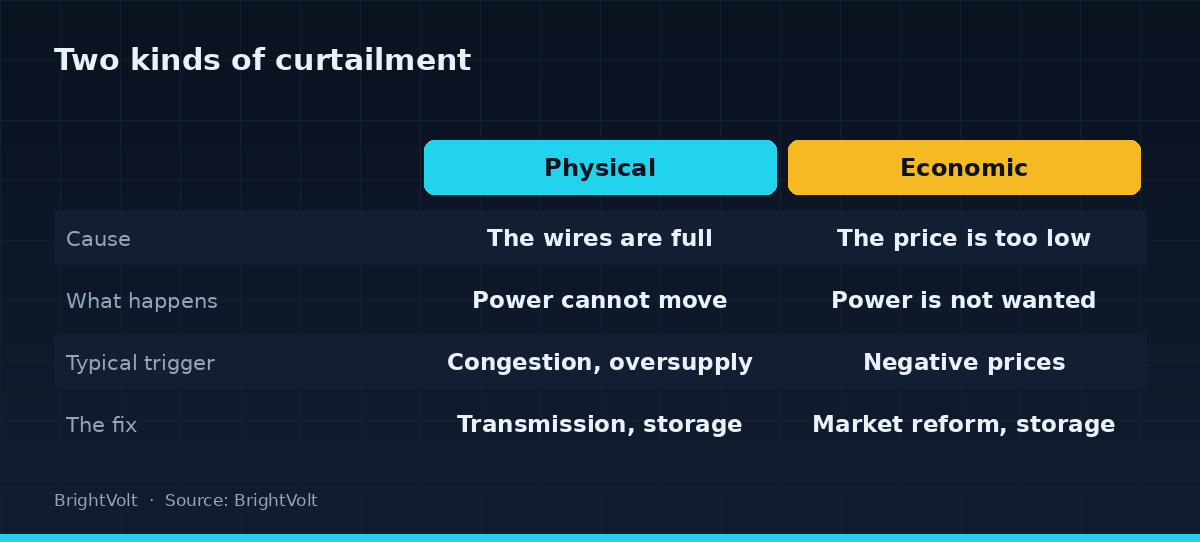
Physical curtailment is when the power has nowhere to go. The transmission lines out of a windy region are full, or the local grid cannot absorb a midday flood of solar, so output is capped because pushing more onto the wire would break something. This is an engineering limit, and it eases only when you build more copper — new lines, bigger substations, storage to soak up the surplus.
Economic curtailment is when the power could flow but the market chooses not to take it. When supply outruns demand, wholesale prices fall, and once they go negative — the grid paying generators to stop — a wind farm without a subsidy will switch itself off rather than pay to keep running. Here nothing is physically full. The system is working exactly as designed; it has simply decided this electron is not worth taking. The fix is not concrete but market design and storage.
The distinction matters because the two respond to different tools, and a grid that blames “congestion” for what is really an oversupply-and-contracts problem will spend billions on the wrong one.
Why a grid refuses free power
Three forces do most of the work, and they usually act together.
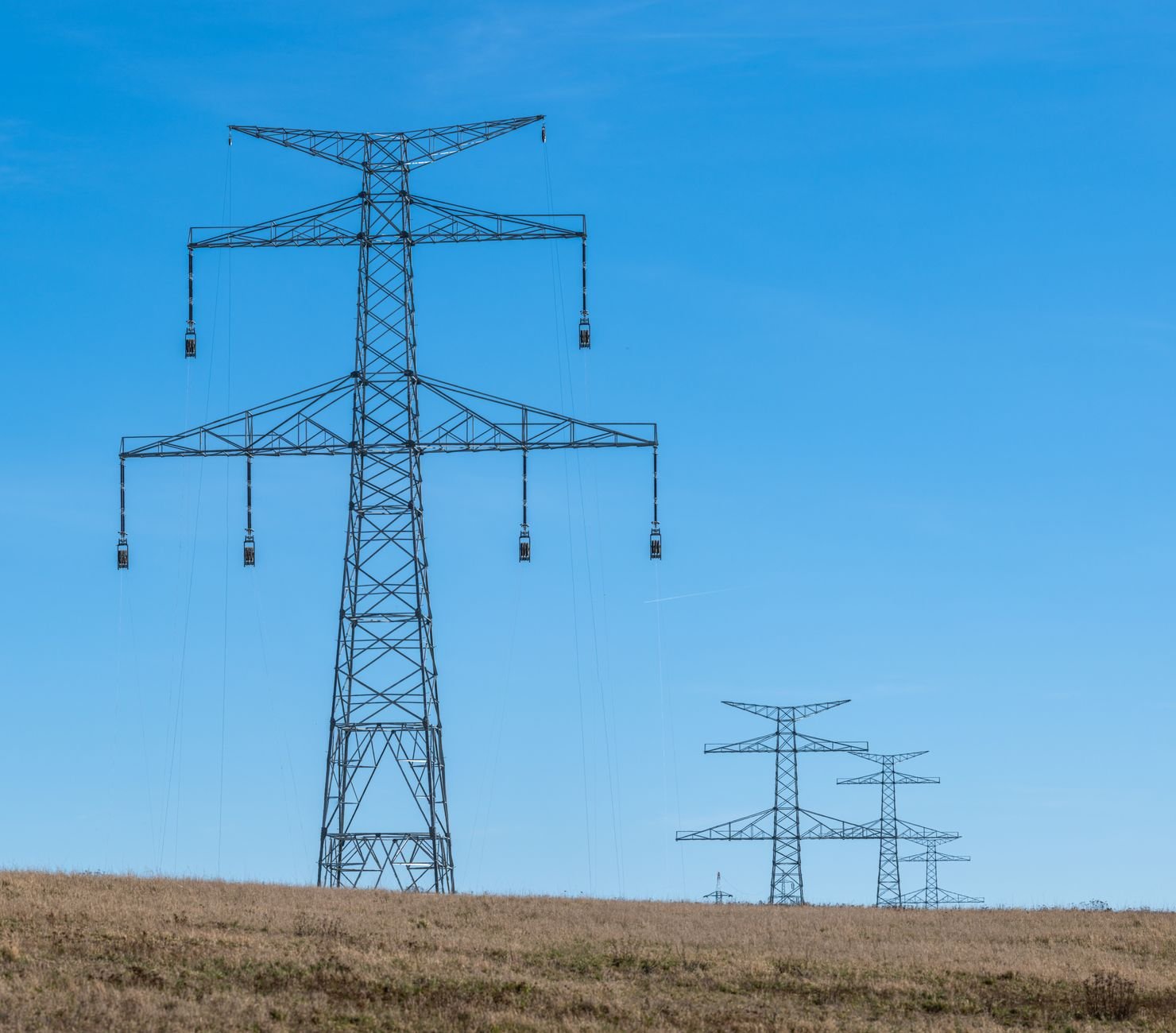
The first is transmission congestion. The best wind and sun are rarely next to the cities that need them. China’s richest resources sit in the north and west while the load is on the coast; California’s solar peaks in the desert and the Central Valley. When the wires between generation and demand fill up, the surplus at the far end is stranded. Building transmission is slow — years of permitting and steel — which is why congestion curtailment persists long after the panels go up, and why the queue to connect, not the panel itself, is often the binding constraint.
The second is minimum generation. A grid cannot run on wind and solar alone yet, because it still leans on large thermal plants — coal, gas, nuclear — for stability and for the evening ramp after the sun sets. Those plants cannot be switched off and on in minutes, so a floor of “must-run” fossil generation stays online through the sunny middle of the day. When solar surges into a system already holding that floor, the solar is what gets trimmed, because the coal plant physically cannot get out of the way fast enough.
The third is who holds the contract. When something must be curtailed, the choice of which generator to cut is a rule, not a law of physics. Grids with guaranteed-offtake contracts or must-run agreements for fossil plants will spill the renewable first, because the fossil plant is being paid to run regardless. That is a policy decision dressed as a technical constraint — and it is the uncomfortable core of China’s curtailment story, where coal’s contracts were left intact while clean power absorbed the surplus.
The number nobody agrees on
Here is the trap in every curtailment headline: the official figure and the real figure can differ by a factor of three.
China’s National Energy Administration reported that 8.6% of solar and 9.1% of wind output were curtailed in the first half of 2026 — uncomfortable, but survivable. Independent analysts at Global Energy Monitor and the Center for Research on Energy and Clean Air, using weather-adjusted estimates of what the fleet should have produced, put the real figure at 26.1% of total wind and solar. The gap is not fraud. It is method: the official rate counts the power that was dispatched and then cut, while the higher estimate also counts solar clipped behind the meter and wind that was never scheduled in the first place — output the official books never see because it was suppressed upstream.
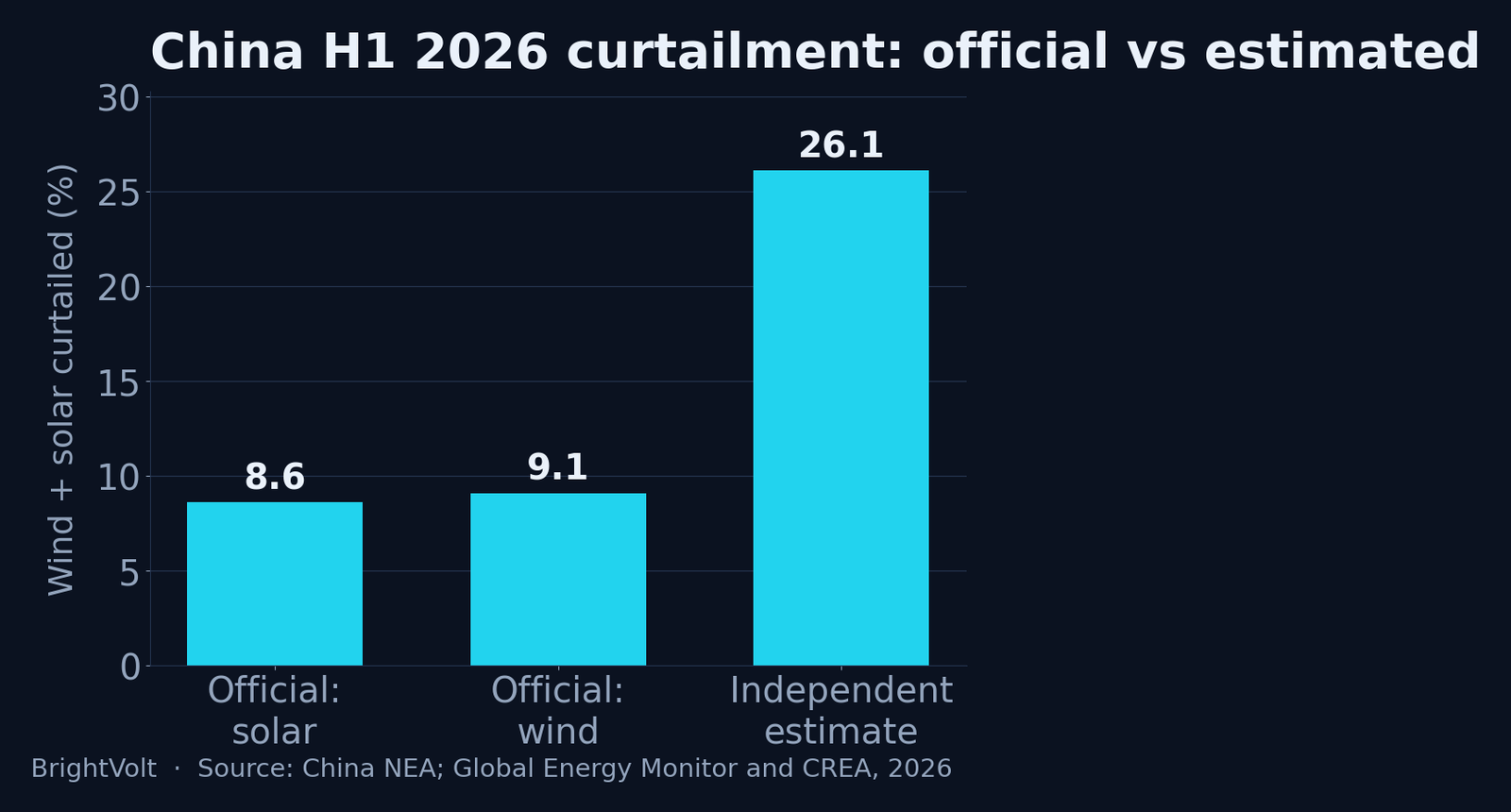
Both numbers are “true.” They answer different questions, and a reader who takes the reassuring one at face value will badly underestimate how much clean power a fast-building grid is actually leaving on the table. Wood Mackenzie’s read on China is blunt: the curtailment is structural, not a temporary bottleneck.
What it looks like in three grids
Curtailment is not a Chinese peculiarity. It shows up wherever renewables grow faster than the wires and the market rules around them.
| Grid | Recent scale | Dominant cause |
|---|---|---|
| China (H1 2026) | ~360 TWh estimated; official rates 8.6% solar / 9.1% wind | Transmission distance plus protected coal contracts |
| California / CAISO (2024) | 3.4 million MWh curtailed, up 29% on 2023 | Spring midday solar oversupply and congestion |
| Great Britain (2025) | Constraint payments on the order of £1.5bn | Scottish wind stranded behind a constrained transmission boundary |
California’s case is the textbook version of oversupply: curtailment peaks in spring, when solar output is high, demand is low, and solar can meet nearly half of the grid’s needs between 8 a.m. and 4 p.m. Britain’s is the textbook version of congestion pricing: the grid pays Scottish wind farms to switch off because the lines south are full, then pays gas plants in England to fill the gap — a bill that runs into the billions and lands on consumers.
How grids stop wasting it
None of the causes is permanent, and the fixes are known — they are just slower and less glamorous than building the generation was.
Storage is the most direct. A battery or a pumped-hydro reservoir absorbs the midday surplus and releases it into the evening ramp, converting curtailed energy into the exact product the grid is short of after sunset. Transmission attacks physical curtailment at the root, moving surplus from where it is generated to where it is needed, though it is the slowest fix of all. Demand shifting — charging EVs, running industry and cooling buildings when power is abundant — pulls load toward the surplus instead of spilling it. And market reform attacks the economic and contractual kind: exposing every generator, fossil included, to the same price signal so the cheapest power to run is the last thing curtailed, not the first.
The honest summary is that a few percent of curtailment is a sign of a healthy, cheap, renewables-rich grid, not a broken one — spilling the occasional surplus is cheaper than building to catch every last electron. The trouble starts when the rate climbs into the double digits and stays there, because then the grid is not managing a surplus; it is failing to use a resource it already paid for. The number to watch is not whether a grid curtails, but whether the rate is falling as storage and wires catch up — or rising as the generation keeps arriving and the system to absorb it does not.
Photo by Quang Nguyen Vinh on Pexels · Photo by Petr Ganaj on Pexels