
Battery Technology
Battery announcements are graded on a curve that rewards the boldest claim. BrightVolt reads them the other way round: what chemistry, at what C-rate, at what cost, at what technology-readiness level, and shipping when. That last distinction matters more than any other — a trial production line and a car you can buy are different events, and most coverage collapses them into one.
We cover lithium-ion and its successors, including LFP, sodium-ion and solid-state, along with the degradation mechanisms such as lithium plating that decide how long a pack actually lasts in the vehicle rather than in the laboratory.

Gobao’s Derailleur-Free Drive Published Its Numbers. One of Them Doesn’t Add Up
150 Nm, 1,500 W peak, 3.85 kg and a 500% stepless range, due February 2027. The weight claim is checkable and holds. The battery line-up says an extra 150 Wh costs 100 grams, which no cell on Earth can do.

BYD Sealion 08: 900 km and a Nine-Minute Charge, Translated
BYD’s flagship Ocean SUV opens at $34,105 with claims of 900 km range and 10-97% in nine minutes. Converted to EPA terms that is about 666 km — and the charge claim implies a sustained 5.8C.
The BrightVolt Take: Solid-State’s 2027 Is Not a Car
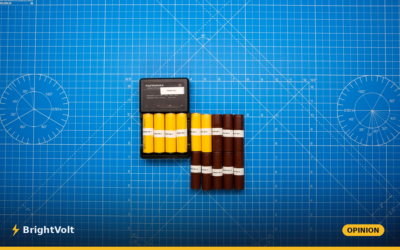
CATL and BYD both target 2027 for solid-state batteries — but that’s a trial line, not a showroom. CATL rates its own tech at TRL 4 of 9 and puts the mass market past 2030.
US Sodium-Ion Bets on the Grid, Not the Car
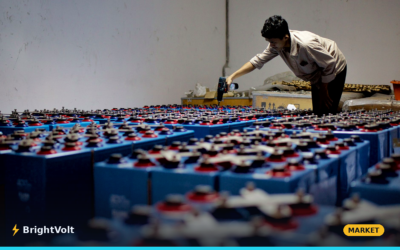
A year after Natron’s $1.4bn sodium-ion factory collapsed, Peak Energy is building America’s first sodium plant at a twentieth the size, betting the grid, not the car, is where sodium wins.
Lithium Plating: Why Fast Charging Degrades Batteries
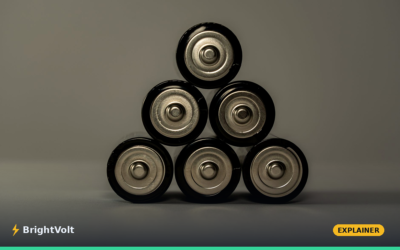
Charge a battery too fast or too cold and lithium plates as metal on the anode instead of storing charge — stripping capacity and, at worst, growing dendrites that short the cell.
What C-Rate Tells You About How Fast an EV Charges
A battery’s C-rate is charge speed relative to its capacity: 1C fills in an hour, 10C in six minutes. BYD hit 10C in 2025. But no car holds its peak, which is why the charger is slower.
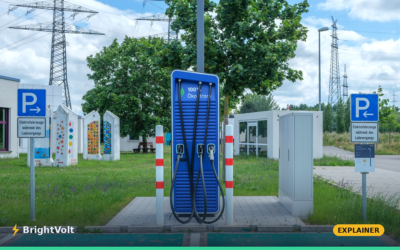
Why a 350 kW Charger Never Gives You 350 kW
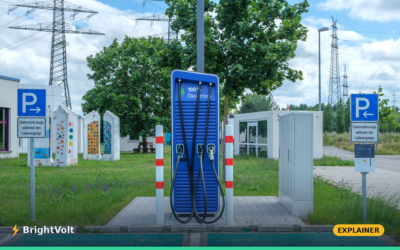
A measured session on a 500 kW charger peaked at 419 kW and averaged 107 kW. Four things explain the gap: the plug’s amp limit, cable heat, battery tapering and shared cabinets.
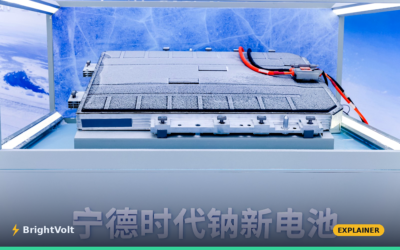
Sodium-Ion Batteries: Why They Won’t Replace Lithium
Sodium cells hold about 175 Wh/kg against LFP’s 205, and four separate physical penalties explain why. What sodium wins on is cold, cycle life and shipping — not range.
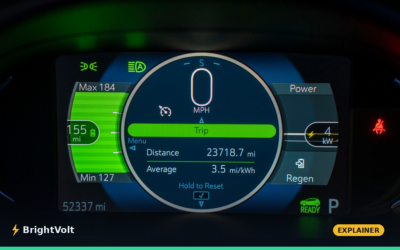
EV Range Explained: Why CLTC, WLTP and EPA Disagree
CLTC range figures run about 35% above EPA and WLTP about 22%, so the same electric car carries three very different numbers. Here is how to convert between them.
BrightVolt
News / Reviews/ Insights on all things Electric and alternative enegry
Contact
info@brightvolt.net
Advertising
Advertsing: ads@brightvolt.net
Public Relations: pr@brightvolt.net
Copyright © 2025 BrightVolt ®