
Renewable Energy
Generation is no longer the hard part. Solar and wind are the cheapest new capacity in most markets, and in 2026 they make up the overwhelming majority of what actually connects to grids — around 79 GW of the 86 GW being added in the United States alone.
The hard parts have moved downstream: what the power is worth when everyone generates at the same moment, whether the wires exist to move it, and how much firm capacity a variable resource can be credited with. BrightVolt covers wind, solar, hydro, grids and home electrification with those questions in front.

The BrightVolt Take: Home Batteries Doubled in Power, Not Size
The median US home battery nearly doubled its power in a year – 6 to 11.4 kW – while its storage stayed flat at 13.5 kWh. Buyers aren’t paying for more hours. They’re paying for more muscle.

The BrightVolt Take: America’s Balcony-Solar Bottleneck
Germany has plugged in 1.3 million balcony-solar kits; the US has almost none. California just legalised it – but the real barrier was never the law. It is a missing standard and a $500 device.

The BrightVolt Take: Pakistan’s Solar Boom Is a Grid Failure
Pakistan installed an estimated 27-38 GW of rooftop solar in two years with no subsidy and no plan – the state counts just 6 GW. Its 2026 net-billing clampdown is the admission.

California’s Balcony Solar Law Outruns Its Hardware
California’s SB 868 legalizes plug-in “balcony” solar for its 39 million residents from January 2027 – a higher 1,200W ceiling than Germany’s, but almost no certified kits to plug in yet.

Japan’s Battery Grid Queue Hit 170 GW. Under 1 GW Is Built
Japan has 170 GW of grid-scale batteries queued to connect and under 1 GW actually connected. On October 1 the rules changed: prove you own the site in two months, or lose your place.

The Data Center Bill That Passed 417-3, Then Stalled
The House voted 417-3 to make big data centers pay their own grid costs; the Senate blocked it 57-43. Neither vote moves your bill – but state tariffs like Ohio’s already do.
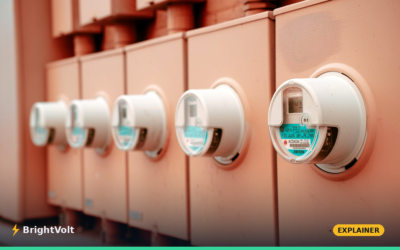
Demand Charges: Why One 15-Minute Peak Sets Your Bill
A demand charge is set by your single highest 15-minute peak, not your total usage – and it can be 30-70% of a commercial power bill. Here’s the math, the ratchet trap, and the fix.

How 100-Hour Batteries Work: Iron-Air and Carbon-Oxygen
Iron-air and carbon-oxygen batteries store power for days and give back barely half of it. That inefficiency is the point: they cost a tenth of lithium per kWh, for a job lithium cannot do.
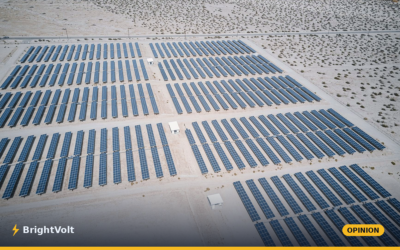
The BrightVolt Take: Solar and Wind Got More Expensive
For the first time in a decade, solar and wind got more expensive in 2025: BNEF has global solar up 6%, Lazard US solar up 18%. Only storage kept falling – and that changes what to build.
BrightVolt
News / Reviews/ Insights on all things Electric and alternative enegry
Contact
info@brightvolt.net
Advertising
Advertsing: ads@brightvolt.net
Public Relations: pr@brightvolt.net
Copyright © 2025 BrightVolt ®