
Smart Grids
The constraint on electricity in most developed countries is no longer generation, it is the wire and the transformer. Interconnection queues measured in terawatts, substations with multi-year lead times, and data-centre demand arriving faster than anyone planned for have made the grid the binding problem.
This section covers interconnection reform, transmission build-out, capacity markets, and the accreditation rules that decide what a generator is allowed to count for — the unglamorous machinery that determines whether clean capacity ever reaches a customer.
Latest coverage
The BrightVolt Take: How Texas Out-Built California on Batteries
Texas has more grid batteries than California and built them faster, with no storage mandate and no capacity market. The lesson isn’t politics. It’s market design.
Grain-Oriented Steel: the Alloy the Grid Runs On
Nearly every transformer on the grid has a core of grain-oriented electrical steel – a 3%-silicon alloy the US makes at one mill. Why it’s so hard to replace, and why lead times now hit four years.
Interconnection Queues: The Clean-Energy Bottleneck
About 2,000 GW of power – more than the entire US fleet – waits in interconnection queues, and only 13% of projects ever connect. What the queue is, why it moves so slowly, and why Texas escapes it.

The BrightVolt Take: China’s Coal Is Contracted to Run
China curtailed an estimated 360 TWh of wind and solar in H1 2026 – more than its entire demand growth – while adding 30 GW of coal. The waste is a policy choice, not a grid limit.
Capacity Factor: Why 1 GW of Solar Isn’t 1 GW of Gas
Capacity factor is the share of its nameplate a plant actually delivers – why nuclear makes 18% of US power from 7.7% of capacity, and why 1 GW of solar and 1 GW of gas are nothing alike.

India’s Grid-Forming Mandate Leans on a Storage Floor
India’s grid regulator wants new solar and wind to run grid-forming inverters and carry two hours of storage from 2027 — a response to the 8,963 MW that tripped at Khavda in 16 seconds.
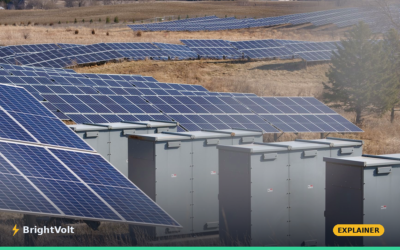
Power vs Energy: What GW and GWh Actually Mean
Power (GW) is how fast a battery discharges; energy (GWh) is how much it holds. Divide one by the other and you get duration – the number a gigawatt figure alone hides.
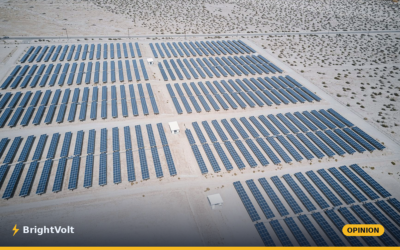
The BrightVolt Take: ‘Anytime Solar’ Is a Ceiling, Not a Fact
The Ember report that coined ‘anytime solar’ found 2026’s batteries could shift 34% of new solar into non-sunny hours. That figure is a theoretical ceiling the fleet is running a third idle beneath.

Grid Batteries Are About to Pass Pumped Hydro on Power
Grid batteries hit 184 GW worldwide by July 2026, nearly matching pumped hydro’s 201 GW on power — but they hold a fraction of its energy, and China built 70% of the latest additions.
Newsletter
Our Newsletter brings you a weekly roundup of the best alternative energy news
BrightVolt
News / Reviews/ Insights on all things Electric and alternative enegry
Contact
info@brightvolt.net
Advertising
Advertsing: ads@brightvolt.net
Public Relations: pr@brightvolt.net
Copyright © 2025 BrightVolt ®