
Smart Grids
The constraint on electricity in most developed countries is no longer generation, it is the wire and the transformer. Interconnection queues measured in terawatts, substations with multi-year lead times, and data-centre demand arriving faster than anyone planned for have made the grid the binding problem.
This section covers interconnection reform, transmission build-out, capacity markets, and the accreditation rules that decide what a generator is allowed to count for — the unglamorous machinery that determines whether clean capacity ever reaches a customer.
Latest coverage

Japan’s Battery Grid Queue Hit 170 GW. Under 1 GW Is Built
Japan has 170 GW of grid-scale batteries queued to connect and under 1 GW actually connected. On October 1 the rules changed: prove you own the site in two months, or lose your place.

The Data Center Bill That Passed 417-3, Then Stalled
The House voted 417-3 to make big data centers pay their own grid costs; the Senate blocked it 57-43. Neither vote moves your bill – but state tariffs like Ohio’s already do.

Demand Charges: Why One 15-Minute Peak Sets Your Bill
A demand charge is set by your single highest 15-minute peak, not your total usage – and it can be 30-70% of a commercial power bill. Here’s the math, the ratchet trap, and the fix.

How 100-Hour Batteries Work: Iron-Air and Carbon-Oxygen
Iron-air and carbon-oxygen batteries store power for days and give back barely half of it. That inefficiency is the point: they cost a tenth of lithium per kWh, for a job lithium cannot do.
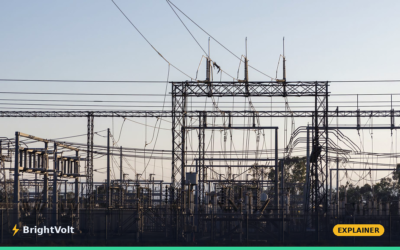
System Strength: The Grid Service Inverters Can’t Fully Fake
As grids fill with wind and solar they run short of system strength – the fault current that lets protection sense a fault. Why it happens, and why the fix is often a machine that generates nothing.
Scarcity Pricing and the ORDC, Explained
In an energy-only grid like Texas, no plant is paid just to exist. Scarcity pricing does that job: the ORDC adder lifts real-time power prices as reserves run low, toward a $5,000/MWh cap. Here is the mechanism.

The BrightVolt Take: The VPP Dispatch That Beat Our Forecast
Sunrun and Tesla dispatched a record 580 MW from 140,000 home batteries. A month ago we pegged that fleet’s real output at 300 MW. We were too cautious – but 16.8 GW is still wrong.
Energy-Only vs Capacity Markets: What Each Rewards
An energy-only market pays a plant only for the power it makes; a capacity market pays it again, years ahead, just to stay available — the design choice behind Texas’s battery boom.

Renewable Curtailment: Why Grids Throw Away Clean Power
Curtailment is a grid deliberately spilling wind and solar it could have used. Why it happens, why the official rate can be a third of the real one, and how grids stop wasting it.
Newsletter
Our Newsletter brings you a weekly roundup of the best alternative energy news
BrightVolt
News / Reviews/ Insights on all things Electric and alternative enegry
Contact
info@brightvolt.net
Advertising
Advertsing: ads@brightvolt.net
Public Relations: pr@brightvolt.net
Copyright © 2025 BrightVolt ®