
Microgrids
A microgrid is a piece of grid that can run on its own when it has to. The case for one is rarely ideological: it is a hospital that cannot lose power, an island paying diesel prices, or a campus whose utility connection would take five years to upgrade.
We cover the configurations that work, the control systems that make islanding safe, and the economics that decide whether the resilience is worth the capital — which increasingly it is, as grid connection queues lengthen and outages grow more frequent.
Latest coverage

Behind the Meter vs Front of Meter: What the Split Means
Which side of the meter a battery sits on decides who owns it, who dispatches it and who gets paid. In 2025 the US installed 16 GW of front-of-meter storage and 2.7 GW behind it.
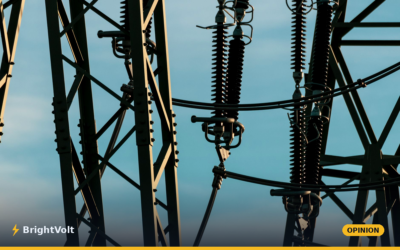
The BrightVolt Take: The Grid Doesn’t Need Spinning Steel
Germany pays batteries to provide grid inertia and China just switched on 4 GWh of it. Britain’s stability auction gave batteries none of 7.3 GVA. The barrier isn’t physics — it’s the rulebook.
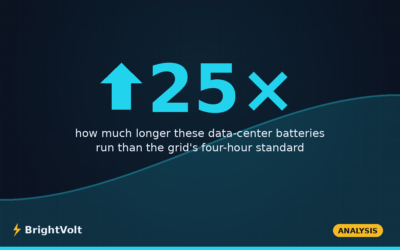
Long-Duration Storage Found Its Buyer: AI Data Centers
Noon Energy and Sabanci just signed to build 1 GW of 100-hour storage for AI data centers. The multi-day battery utilities would not buy has finally found a customer that will.
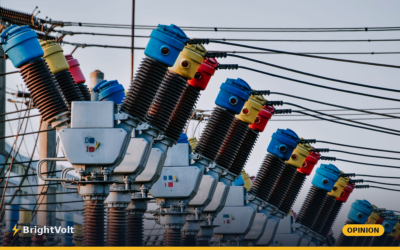
The BrightVolt Take: The Transformer Is the Real Bottleneck
The US imports 82% of its large power transformers and makes their core steel in one plant. With lead times near three years, the grid’s real bottleneck is a grey box, not the generation mix.
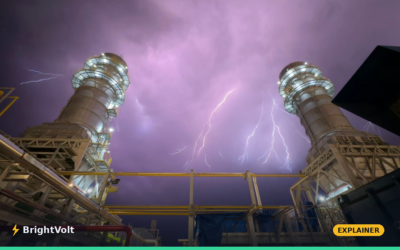
Peaker Plants: Why the Grid’s Priciest Power Runs Least
A gas peaker is the most expensive power on the grid — up to $276/MWh — precisely because it runs so little, some for under ten hours a year. That is why batteries retire them first.
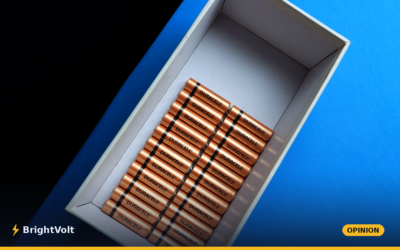
The BrightVolt Take: Utilities Want Your Home Battery Now
Green Mountain Power’s home-battery fleet replaced two peaker plants and saved $6M in one July hour. Utilities fought rooftop solar for years. Now they pay to install the batteries.
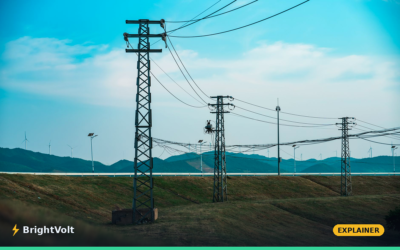
Capacity Accreditation Explained: Why a 100 MW Wind Farm Counts as 34 MW
Grids pay generators for a promise to show up when it matters, and ELCC decides how much of your nameplate counts. It is why PJM’s wind accreditation fell to 34% while four-hour storage rose to 59%.
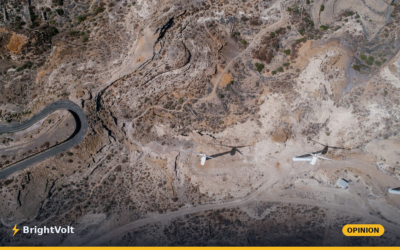
The BrightVolt Take: Gas Didn’t Win the AI Power Race
The US grid adds a record 86 GW in 2026 — but only 6.3 GW of gas. The 116 GW turbine backlog everyone cites doesn’t deliver until 2031. Solar and storage are answering the AI load.

The West Licenses Pumped Storage. China Builds It.
Global pumped storage passed 201 GW in 2025 with 243 GW under construction. China accounts for 218 GW of it. North America has 60 GW in development and almost nothing being built.
Newsletter
Get Notified Of New Listings & Homeowner Tips
Divi Real Estate
There are many variations of passages of Lorem Ipsum available, but the majority have suffered alteration in some form, by injected humour
Contact
(923)-234-6788
Offices
4254 Divi St. San Francisco, CA
2354 Extra Blvd. San Jose, CA
