
Battery Technology
Battery announcements are graded on a curve that rewards the boldest claim. BrightVolt reads them the other way round: what chemistry, at what C-rate, at what cost, at what technology-readiness level, and shipping when. That last distinction matters more than any other — a trial production line and a car you can buy are different events, and most coverage collapses them into one.
We cover lithium-ion and its successors, including LFP, sodium-ion and solid-state, along with the degradation mechanisms such as lithium plating that decide how long a pack actually lasts in the vehicle rather than in the laboratory.

Nameplate vs Effective Energy Density: Fuel’s Real Lead
Diesel carries roughly 60 times the energy per kilogram of a battery. But an engine wastes most of it while an electric motor wastes almost none, so the real gap in useful work is nearer 25 to 1.

South Africa Orders 4.6 GW of Batteries, No New Solar
South Africa’s first procurement off its new energy plan orders 4,600 MW of batteries and 5,000 MW of gas-to-power — and zero new wind or solar. The reason is a grid with too much power, not too little.
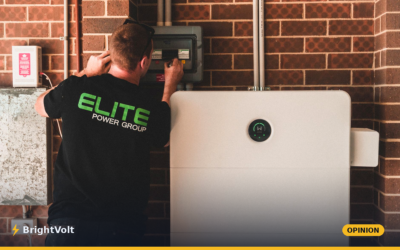
The BrightVolt Take: Home Batteries Doubled in Power, Not Size
The median US home battery nearly doubled its power in a year – 6 to 11.4 kW – while its storage stayed flat at 13.5 kWh. Buyers aren’t paying for more hours. They’re paying for more muscle.
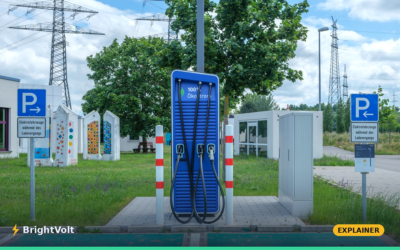
Why Fast EV Chargers Now Have Batteries Inside
A battery-buffered charger delivers far more power than its grid connection supplies – FreeWire’s Boost 200 does 200 kW on a 27 kW feed. Here’s how, why, and where it stops working.
E-Bike Battery Specs: What the Numbers Don’t Tell You
Volts times amp-hours gives watt-hours, the real range number. But cell quality, the BMS and UL certification aren’t on the label – and in NYC they’re the difference between 18 fire deaths and one.

Japan’s Battery Grid Queue Hit 170 GW. Under 1 GW Is Built
Japan has 170 GW of grid-scale batteries queued to connect and under 1 GW actually connected. On October 1 the rules changed: prove you own the site in two months, or lose your place.
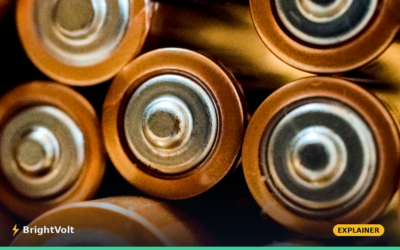
Prismatic vs Pouch vs Cylindrical Battery Cells
Lithium cells come in three shapes – cylindrical, prismatic and pouch – and the choice sets packing, cooling, cost and failure. Prismatic now holds 69% of EV batteries. Here is why.
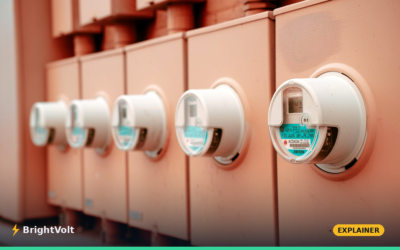
Demand Charges: Why One 15-Minute Peak Sets Your Bill
A demand charge is set by your single highest 15-minute peak, not your total usage – and it can be 30-70% of a commercial power bill. Here’s the math, the ratchet trap, and the fix.
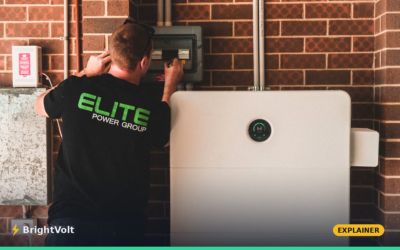
How 100-Hour Batteries Work: Iron-Air and Carbon-Oxygen
Iron-air and carbon-oxygen batteries store power for days and give back barely half of it. That inefficiency is the point: they cost a tenth of lithium per kWh, for a job lithium cannot do.
BrightVolt
News / Reviews/ Insights on all things Electric and alternative enegry
Contact
info@brightvolt.net
Advertising
Advertsing: ads@brightvolt.net
Public Relations: pr@brightvolt.net
Copyright © 2025 BrightVolt ®